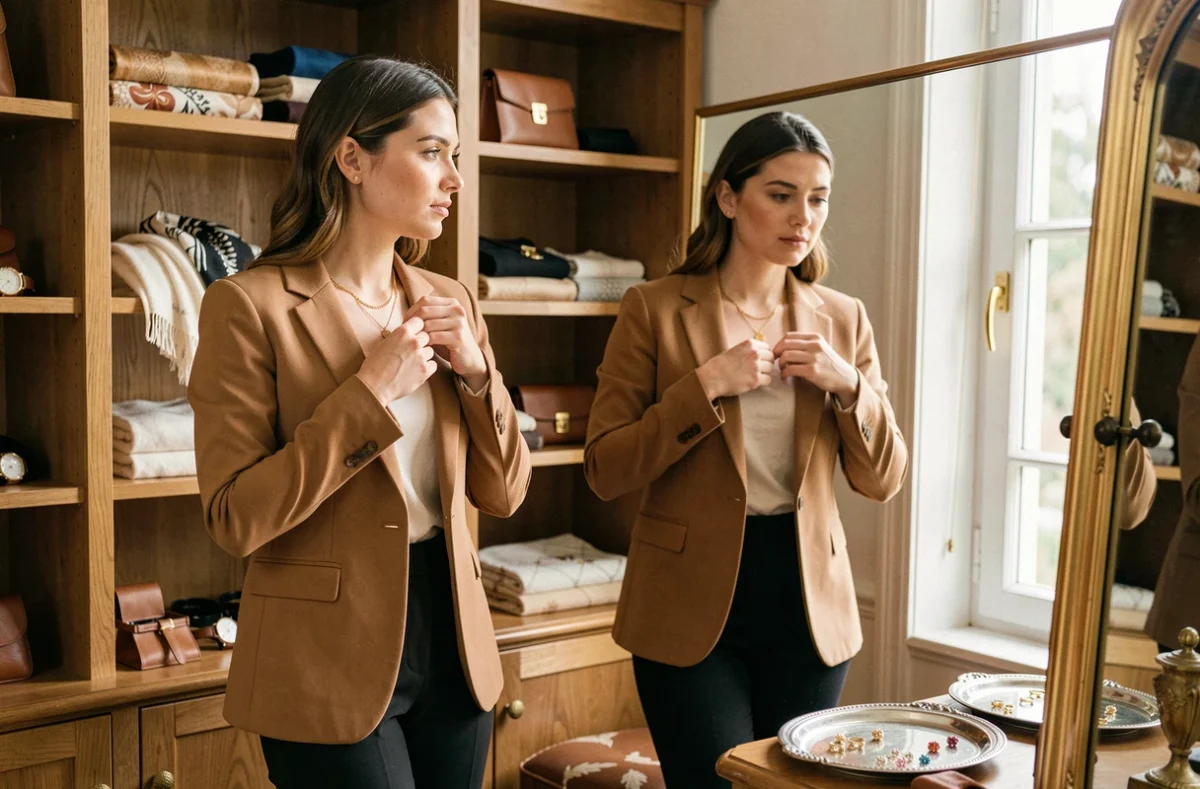
An accessory changes how an outfit is visually read. It shifts the focal point, alters perceived proportions and introduces a contrast in texture or color that wasn’t present in the clothing alone. Choosing an accessory elegantly starts with understanding this interplay of focal point and proportion, before considering the latest trend.
Focal points and the visual hierarchy of accessories
The eye is drawn first to the element that creates the strongest contrast with its surroundings. A gold necklace against a black crew neck draws attention to the torso. A colorful belt on a plain dress defines the waist and divides the silhouette into two distinct sections.
This principle has a direct bearing on what you choose: every accessory you add shifts or dilutes the focal point. Two statement pieces at the same level (a bold necklace and oversized earrings) compete visually. The eye doesn’t know where to settle, and the outfit becomes harder to read.
The practical rule can be summed up in one sentence: one dominant accessory per area of the body. The upper area (ears, neck, shoulders), the middle area (wrists, waist, hands) and the lower area (ankles, shoes) work as three separate zones.
You can place a standout piece in each zone, as long as the other two remain understated. Browsing Fashion Pulse accessories, you’ll quickly notice that the most versatile pieces are those that stay within one zone without spilling into the others.
Materials and textures: the often-overlooked factor when choosing an accessory
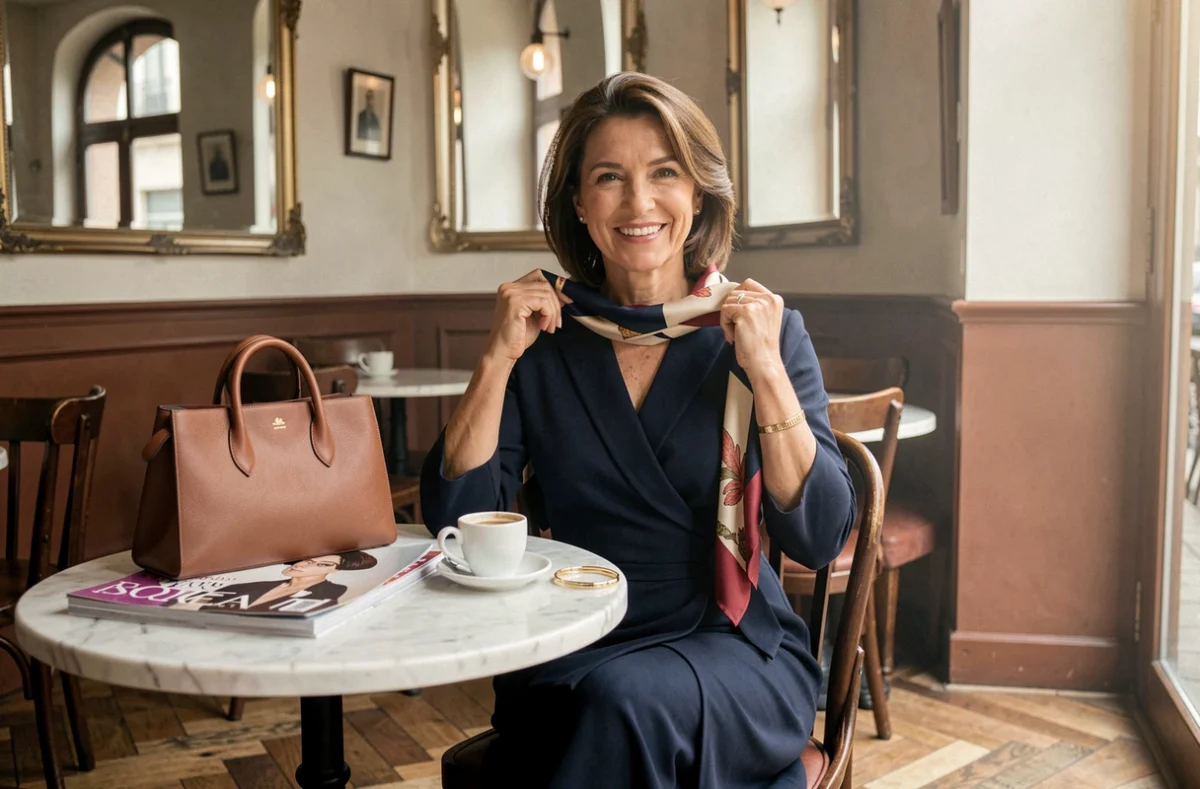
Color catches the eye, but material gives a look its tactile cohesion. A grained leather bag, a smooth leather belt and brushed metal jewelry create a different effect from a patent bag, a fabric belt and polished jewelry. The first combination suggests a structured style. The second mixes too many finishes and muddles the message.
To assess whether materials work together, simply sort textures into three groups:
- Matte, natural materials (grained leather, linen, wood, horn, brushed or satin-finish metal), which pair easily without visual friction.
- Smooth, shiny materials (patent leather, polished metal, satin, sequins, resin), which create a dressier look and should be kept consistent with one another.
- Soft textile materials (knit, crochet, felt, boiled wool), which add volume and work better with rigid contrasts than with other soft pieces.
A shiny piece can work as an accent in an otherwise matte outfit. Mixing three different texture groups in the same outfit creates a disjointed effect. This texture-based filter prevents far more mismatched combinations than sorting by color alone.
Accessory colors: look beyond matching tones
Matching your bag to your shoes or wearing silver jewelry with a silver watch is a reliable choice. But elegance isn’t limited to repeating the same color.
The most useful principle is controlled contrast against a neutral base. With an outfit in neutral colors (black, white, navy, beige, gray), a single accessory in a bold color (red, emerald, mustard) creates interest without overwhelming the look. The reverse works too: with a colorful outfit, neutral or metallic accessories bring everything together.
Two common mistakes are worth noting. The first is adding several bright accessories when the outfit already features a bold color. The second is choosing an accessory in a shade that’s close to, but not quite the same as, the clothing. A burgundy bag with a red dress doesn’t create harmony; it makes the choice look uncertain.
Durability and versatility: choose accessories that last beyond one season
European regulations are moving toward greater traceability for fashion products, with increasing requirements around durability, repairability and material information. This framework reinforces an already sound approach to choosing accessories: favor a repairable, traceable piece over a disposable one.
Before buying a bag, belt or piece of jewelry, three checks can help you assess how long it will last:
- Does the brand provide precise information about the materials and where they come from? A complete lack of information is a warning sign about quality.
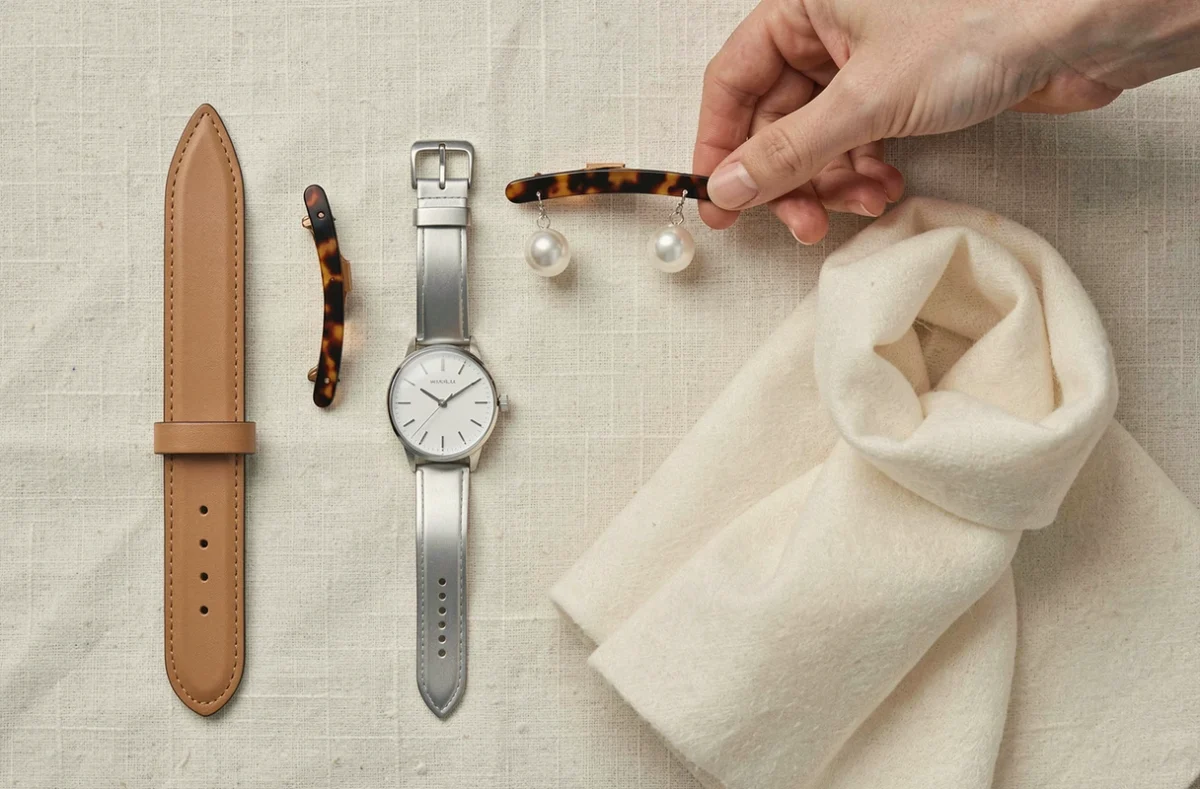
- Can the piece be repaired? A bag with a replaceable clasp or a belt that can be shortened can offer several extra years of use.
- Does the accessory work with at least three different outfits in your existing wardrobe? Try picturing it with a casual look, an office look and a dressier look. If it only works in one setting, you’ll eventually stop wearing it.
The secondhand market for fashion accessories grows every year, which also means that a well-chosen accessory retains its resale value. This can help you choose between two models at the same price: the one that ages better and remains in demand on the secondhand market is a better style investment.
Choose accessories to suit your body shape and silhouette
An accessory doesn’t exist in isolation; it interacts with the proportions of your body and clothing. Scale matters just as much as style. A very small bag carried by someone with a tall, broad silhouette can look insignificant. A short, chunky necklace on a short neck can make it look even more compressed.
The basic principle is scale: the size of the accessory should match the scale of the silhouette. Fine-boned frames gain presence from delicate, precise pieces. Broader or taller silhouettes can carry—and often call for—more substantial accessories to maintain visual balance.
The length of necklaces and long pendants also changes how the torso looks. A long pendant visually elongates the torso. A choker broadens the shoulder line. These effects are subtle, but combined with the choice of focal point and texture, they create a sense of cohesion that you can perceive without necessarily analyzing it.
Elegance in accessories doesn’t come from how many pieces you wear or how much they cost. It comes from making precise choices: a clear focal point, cohesive materials, intentional color contrast and well-balanced proportions. Four criteria that matter more than an entire collection worn at random.