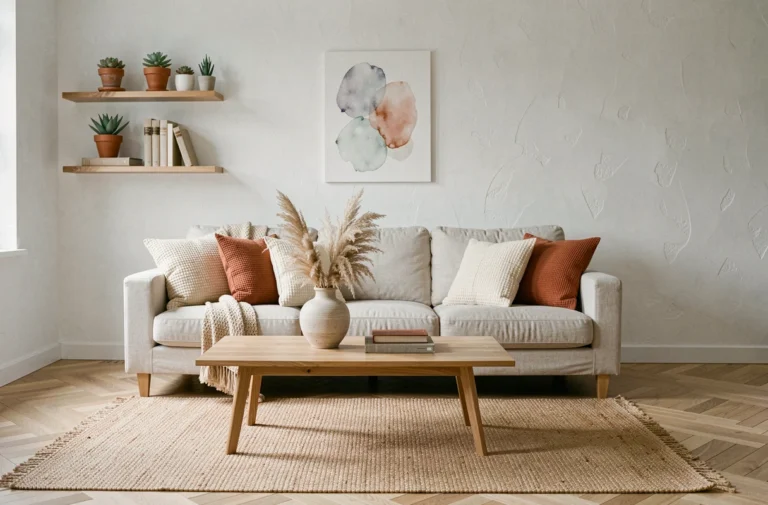
A moved cushion, a changed light fixture, a shade applied to just one wall: the transformation of an interior often comes down to precise gestures rather than major renovations. Trendy decor doesn’t require tearing everything down to rebuild. It relies on targeted choices, well-thought-out materials, and a careful reading of the space you have.
PFAS-free upholstery textiles: the decor criterion that no one looks at
Have you ever flipped over a sofa cushion to read its composition label? Most buyers choose a fabric for its color or texture, without questioning how it has been treated. Traditional stain treatments often rely on per- and polyfluoroalkyl substances (PFAS), dubbed “forever chemicals” because they persist in the environment.
An article published by Robin Saulet in October 2026 highlights the growing visibility of PFAS-free upholstery textiles, referencing observations from the PRC Auvergne. For your cushion covers, curtains, or throws, asking the manufacturer about the presence of these treatments becomes a useful reflex. A fabric made of raw linen or untreated cotton ages differently, but it does not release problematic microparticles into your living room.
When you browse the decor on Monsieur Bricoleur, you notice that the advice increasingly focuses on the quality of materials and not just their visual appeal. This shift reflects an underlying trend: decorating also means choosing what you accept to introduce into your home.
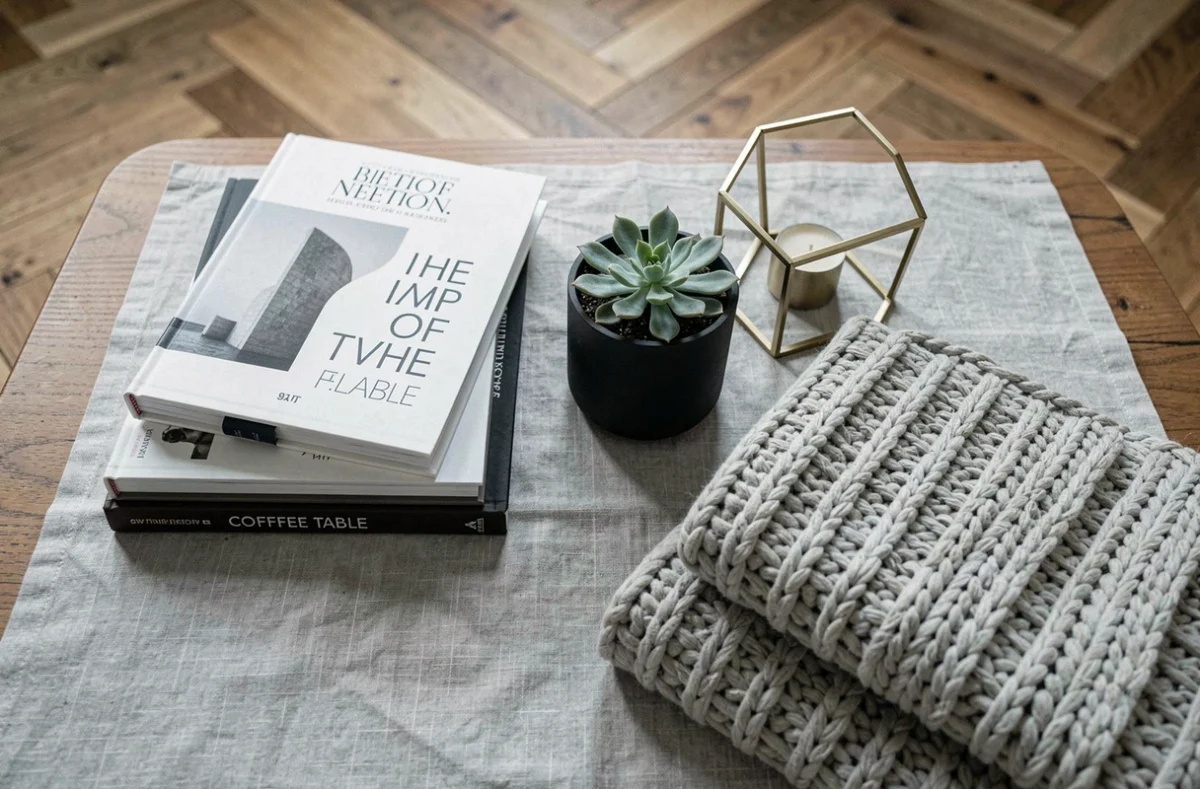
Repairability of decorative furniture: a choice that changes the lifespan of a piece
The European regulation on the ecodesign of durable products (ESPR) encourages manufacturers to enhance the durability, repairability, and recyclability of certain product categories. In decor, this translates into a concrete question before each purchase: can this piece of furniture be repaired?
A solid wood table leg that is screwed on can be replaced in ten minutes. A glued and molded leg in a particle board cannot be repaired. Checking the availability of spare parts and the ease of disassembly before buying prevents you from having to throw away an entire piece of furniture for a broken part.
What to examine before buying
- The assembly method: visible screws or removable connectors allow for piece-by-piece replacement, unlike glued or stapled assemblies
- The availability of spare parts: some manufacturers clearly state how long components remain available
- The nature of the covering: a removable fabric (zippered cover) can be washed or replaced, while a stretched and stapled fabric on the structure does not forgive the slightest stain
This reasoning also applies to light fixtures: a standard lampshade that unscrews offers much more flexibility than a monobloc model. Thinking about repairability means thinking about long-term transformation.
Colors and light in the living room: adapting the palette to the actual space
Competitors talk a lot about “accent walls” or “soothing colors.” But the preliminary question is rarely asked: how much natural light enters your room, and at what time?
A dark color in a north-facing living room will appear dull by mid-afternoon. The same shade in a south-west facing room will gain depth with the evening’s low light. Before choosing a color for your wall, observe your living room at three times of the day: morning, noon, and late afternoon.
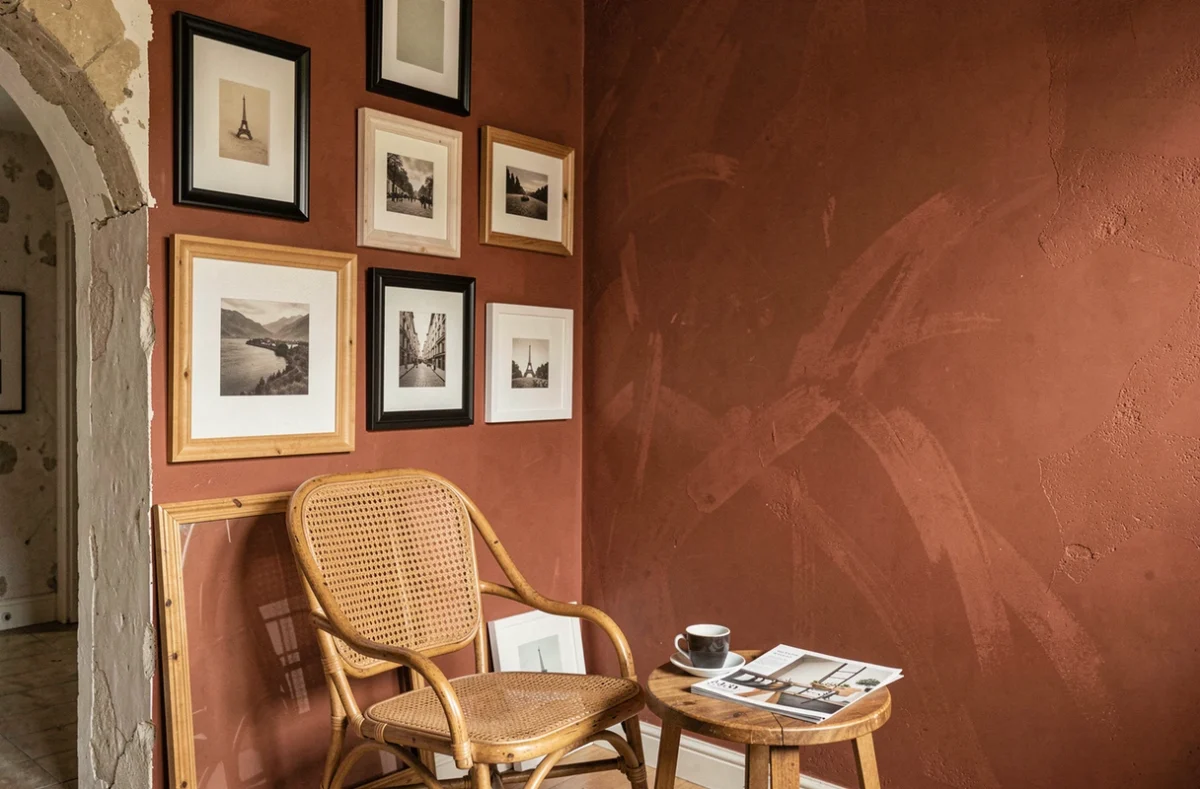
Test before painting an entire wall
Apply a paint sample to an area of about half a square meter, directly on the targeted wall. Let it dry and observe the result under natural light and under artificial light in the evening. Store paint swatches, illuminated by neon lights, never replicate the actual conditions of your interior.
For choosing light fixtures, multiplying low light sources (table lamps, wall sconces directed towards the wall) creates a warmer atmosphere than a single central ceiling light. A living room with three distinct light points allows you to modulate the atmosphere according to the moment.
Second-hand and decorative furniture: a nuance to know
The second-hand market is accelerating in France, but it is important to distinguish between two realities. Second-hand textiles (clothing, accessories) are very structured, with dedicated platforms and significant volumes. Second-hand furniture operates differently: pieces are bulkier, transport is expensive, and the condition of the furniture is difficult to verify online.
Thrifting at flea markets or local recycling centers remains the most reliable way to find quality decorative furniture. You can touch the material, open drawers, and check the assemblies. A vintage wooden and fabric armchair, even worn, can be reupholstered at a moderate cost if its structure is sound.
Integrating a thrifted piece into a contemporary interior
An antique piece does not need to “match” the rest. It is the contrast that creates interest. An oak sideboard from the 1950s placed against a sage green wall produces a visual discrepancy that adds character to the room. The mistake would be to try to harmonize everything to the millimeter: an overly cohesive interior loses its personality.

Interior insulation and decor: coordinating both projects
When interior insulation is carried out, it slightly reduces the living space and alters the depth of window frames. These changes have a direct impact on decor: curtains no longer fall in the same place, furniture that touched the wall must be repositioned, and the added thickness around the windows changes the diffusion of light.
If you are planning energy renovations, schedule the decor update after their completion. Painting a wall that will be covered with insulation three months later is a waste of time and money. Conversely, taking advantage of freshly insulated walls to choose a new shade and reposition furniture transforms a technical constraint into a decorative opportunity.
The transformation of an interior gains coherence when it combines aesthetic choices with material decisions: composition of textiles, repairability of furniture, adaptation to the physical constraints of the space. A living room that reflects you is not one that reproduces a magazine photo, but one where each element has been chosen with awareness.