The decorative garden as it was conceived ten years ago, with English lawn and water-hungry flower beds, is no longer sustainable. Water constraints, warming soils, and prefectural watering bans require a rethink of every plant choice and material. Enhancing your home and garden now involves precise technical decisions, not yet another inspiration catalog.
Drainage and soil preparation: the invisible foundation of a sustainable decorative garden
A failed dry garden is almost always due to the soil, not the choice of plants. Drainage preparation is the step that inspirational content often overlooks, yet it conditions the survival of plants over several years.
The principle is straightforward: unamended clay soil retains water in winter and cracks in summer. Roots rot or dry out depending on the season. Before any planting, adding gravel and coarse sand to a depth of 20 to 30 cm restructures the drainage layer. Mineral mulching (pumice, schist) complements the system by limiting evaporation without retaining moisture at the collar.
Recent recommendations emphasize a watering phase maintained during the first two or three years, even for plants reputed to be drought-resistant. This installation constraint is incompatible with an immediate “zero watering” project. We recommend planning plantings in the fall to take advantage of winter rains and reduce this weaning period.
To explore other angles on interior and exterior design, an overview of the Déco et Jardin site allows for a cross-examination of decoration and plant themes.
Drought-resistant plants: reading the codes before choosing
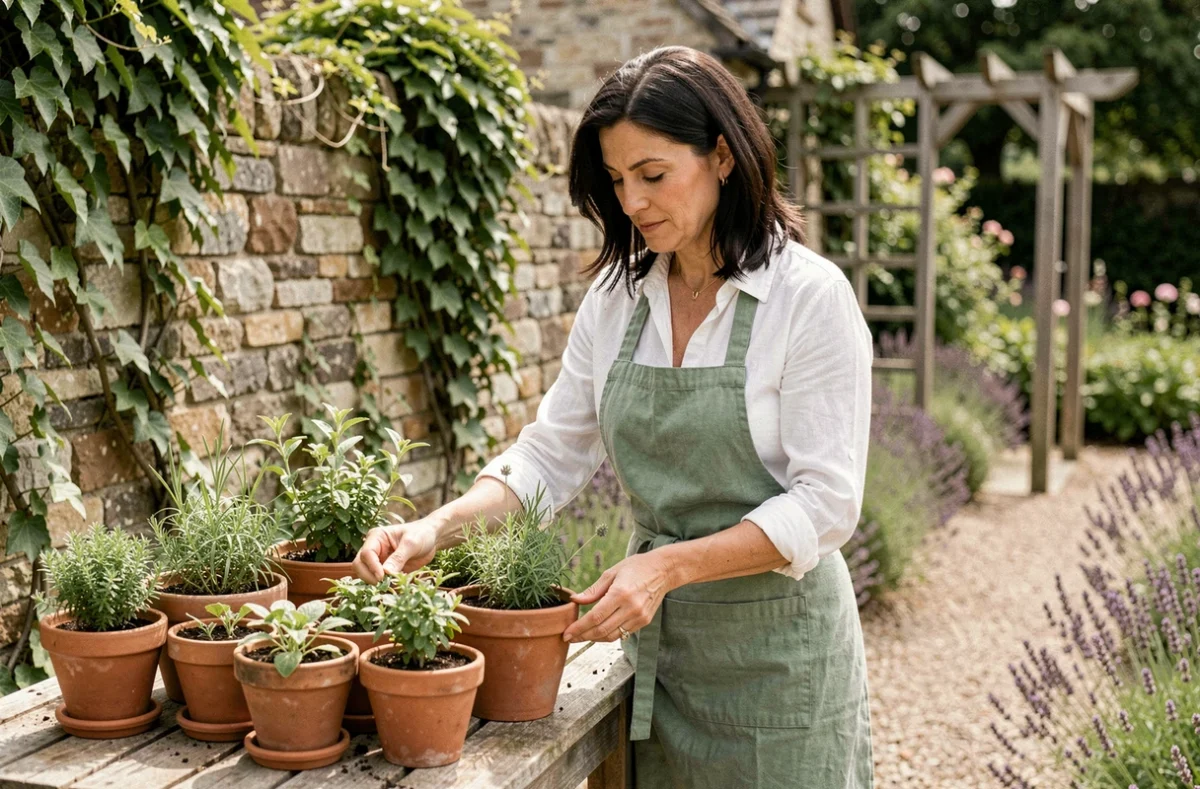
Not all plants labeled “Mediterranean” can withstand the same levels of water stress. The Filippi nursery uses a drought code graded from 1 to 6, which allows for an objective comparison of each species’ summer tolerance. This reference remains underutilized in popular articles, where lavender, rosemary, and agapanthus are often simply listed without hierarchy.
Combined criteria to check before purchase
- Hardiness (winter cold resistance) says nothing about drought resistance. A gaura tolerates frost but suffers in dry, compact soil without appropriate mulching.
- The drought code must be cross-referenced with soil type: a plant rated 5/6 in draining soil may fail in heavy clay even without excess water.
- Local watering restrictions influence the calendar. In Gard, watering perennials is prohibited during heightened alerts, but recent plantings of trees and shrubs benefit from exceptions framed by prefectural order.
A well-designed dry garden takes two to three years to become self-sufficient. The impatient who eliminate watering in the first season lose the majority of their plants. This is the most common and costly mistake.
Interior decoration: natural materials and coherence between inside and outside
The trend of raw wood and mineral hues is not just aesthetic. It responds to a logic of continuity between the interior space and the garden, particularly effective in homes with large windows or covered terraces.
Untreated wood (oak, chestnut, Douglas fir) used for exterior cladding can extend into screens or interior storage. Material coherence between inside and outside visually enlarges the space without resorting to decorative artifices. In contrast, imported exotic wood poses a supply and traceability issue that we advise against ignoring.
Colors and finishes: balancing durability and effect
Bright colors on fences or shutters create immediate visual impact, but their longevity directly depends on UV exposure and the type of paint. A microporous finish on wood lasts three to five times longer than a standard lacquer in full sun.
For the living room or bedroom, lime-based coatings and mineral paints offer a matte finish that ages better than standard acrylic paints. Interior design benefits from relying on colors found in the garden: gray of stones, ochre of soils, green of evergreen foliage.
Rainwater harvesting: a decorative and functional investment
According to the Ifop barometer for Unep published in March 2025, 84% of French people have already changed their gardening practices or are considering doing so in response to climate change. Rainwater harvesting is among the most cited responses.
Buried tanks remain the most efficient solution but are the heaviest to install. Above-ground tanks, often overlooked for aesthetic reasons, now come in models clad in wood or integrated into raised planters. The decorative idea aligns here with functional design: a well-positioned rainwater tank feeds a gravity drip system that meets the needs of the first years of planting.
The local prefectural order remains the reference for knowing what can be watered and with what source. Stored rainwater generally benefits from a regulatory treatment distinct from network water, allowing its use even during restrictions, depending on the departments.
Outdoor design: mulching and coverings as design elements
Mulching is not a cover-up. In a dry garden, it serves three simultaneous functions: limiting evaporation, regulating soil temperature, and visually structuring the beds. The choice between organic mulching (shredded bark, chips) and mineral (slate, pumice) depends on the desired style and soil nature.
- Mineral mulching suits Mediterranean compositions and does not decompose, but it heats up more in summer.
- Organic mulching enriches the soil as it decomposes, ideal for perennial beds in the installation phase.
- The effective minimum thickness is around 5 to 8 cm. Below this, the anti-evaporation effect is negligible.
The terrace covering directly influences the perceived temperature in adjacent rooms. A light-colored natural stone slab reflects less heat than a dark composite, a parameter rarely considered in purely decorative choices.
Every decoration decision, both inside and in the garden, benefits from being tested against a simple question: will this choice last for five years without disproportionate maintenance? Durable materials, plants suited to the local climate, and rainwater harvesting systems are not aesthetic compromises. They are the foundations of a design that remains beautiful because it remains viable.