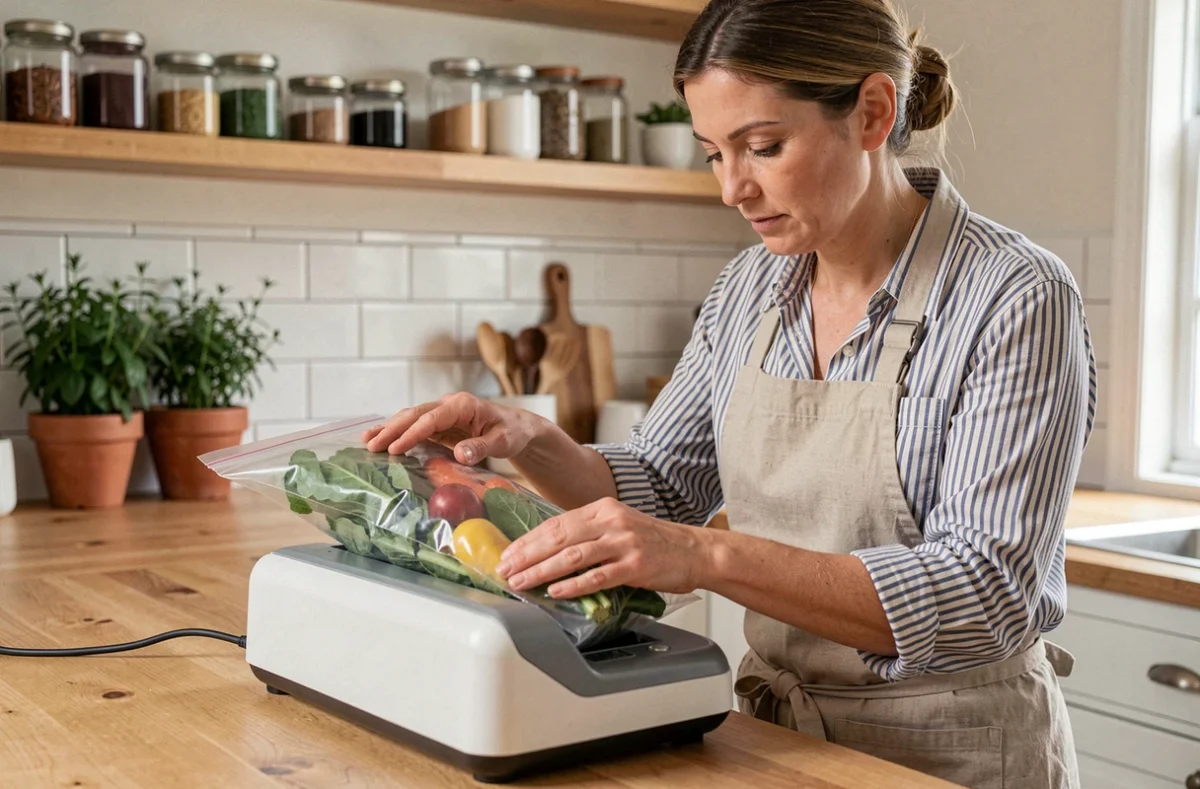
We buy in bulk, prepare Sunday meals for the week, and by Tuesday evening the meat has already gone bad. Vacuum sealing solves a good part of this problem, but not just any way. If not mastered properly, this method can even create a health risk that traditional preservation does not entail.
Clostridium botulinum: the risk that vacuum sealing itself creates
Most guides explain how to remove air from a bag. Few detail what happens next in an oxygen-free environment. By removing the air, we block the majority of aerobic bacteria, those that need oxygen to grow. But at the same time, we provide a favorable environment for anaerobic bacteria, including Clostridium botulinum, responsible for botulism.
This microorganism produces a dangerous toxin specifically in oxygen-deprived environments. A vacuum-sealed food item stored at too high a temperature, even for a few hours, can become a silent incubator. No odor, no color change signals the problem.
Furthermore, Anses reminds us that ready-to-eat foods packaged under vacuum can pose a risk related to Listeria monocytogenes, especially when their shelf life is extended in the refrigerator. People often refer to a vacuum food preservation chart for a duration reference, which remains useful as long as one does not forget that these durations assume a strictly maintained cold chain.
Temperature and cooling after vacuum sealing
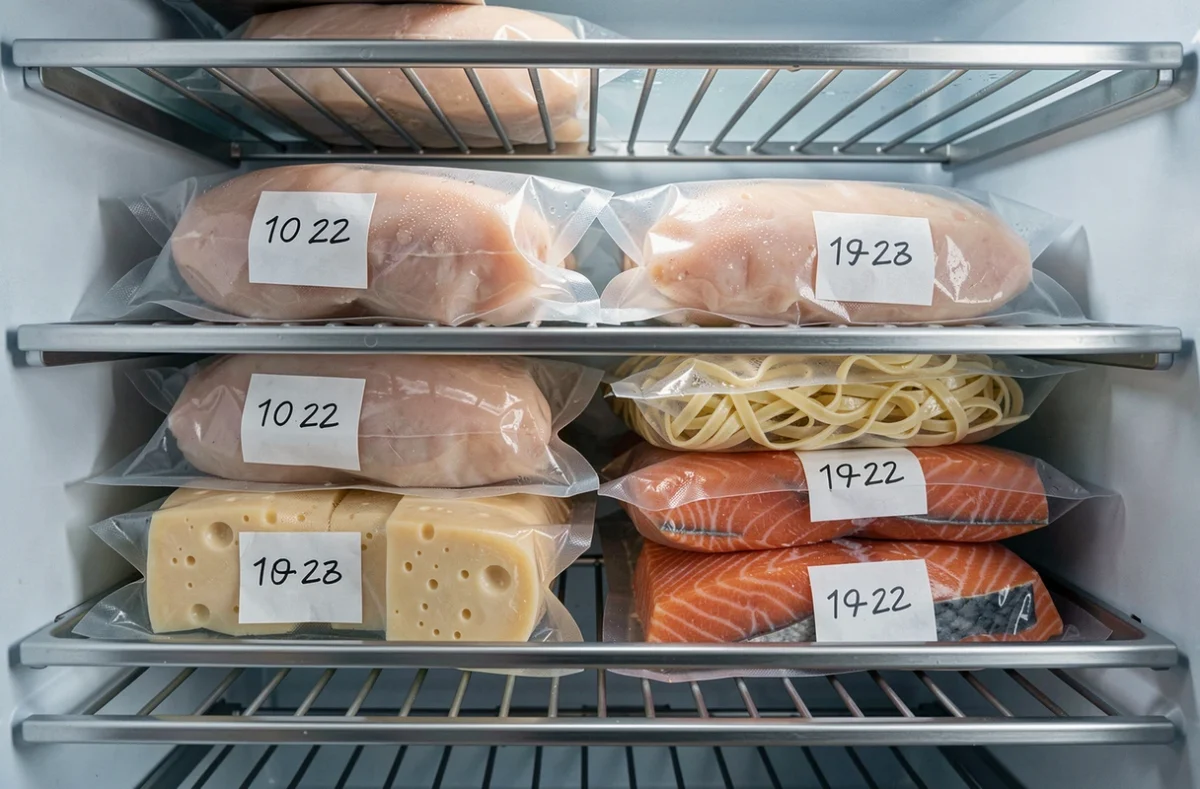
The sealed bag does not do everything. The cold chain conditions the safety of the food much more than the level of vacuum achieved by the machine. A cooked dish wrapped while still warm will see its temperature stagnate in the critical zone where bacteria multiply the fastest.
In practice, we cool first, then package. If the food comes out of the oven or pot, it must cool quickly before being vacuum sealed. Letting a dish cool at room temperature for an hour before packaging is a common mistake: the cooling is too slow.
What “well-regulated refrigerator” means in practice
A domestic refrigerator often fluctuates between 4 and 7 °C depending on the area and the frequency of door openings. For vacuum sealing, we aim for the coldest part of the appliance, usually the bottom shelf or the one just above the vegetable drawer. A fridge thermometer costing a few euros allows for verification.
A two-degree difference can halve the shelf life of certain sensitive products like fish or ground meat. Feedback varies on this point depending on the devices, but the trend remains the same: colder, longer.
Which foods to vacuum seal in the refrigerator and freezer
Not all foods react the same way to air removal. Some adapt remarkably well, others require precautions, and a few have nothing to gain.
Foods that gain the most in shelf life
- Raw meats (steaks, chops, fillets) go from a traditional preservation of a few days in the refrigerator to a significantly extended duration under vacuum, sometimes several weeks in the freezer without freezer burn.
- Blanched vegetables (green beans, broccoli, carrots) retain their texture and nutrients much better under vacuum than in a standard zip bag, especially in the freezer.
- Quickly cooled cooked dishes keep in the refrigerator noticeably longer than in a standard airtight container, provided the cold chain is respected.
Foods to handle with caution
- Soft cheeses continue to ripen under vacuum and can develop undesirable flavors. They should be wrapped in cheese paper before sealing, or simply avoided for vacuum sealing.
- Raw unblanched fruits and vegetables (lettuce, tomatoes, fresh mushrooms) get crushed under the pressure of vacuum. A reduced pressure vacuum sealing mode can limit the problem, but the result often remains disappointing for very watery products.
- Bread and pastries get compacted. It is preferable to freeze them in a well-sealed standard bag, then vacuum seal only for long-term storage in the freezer.
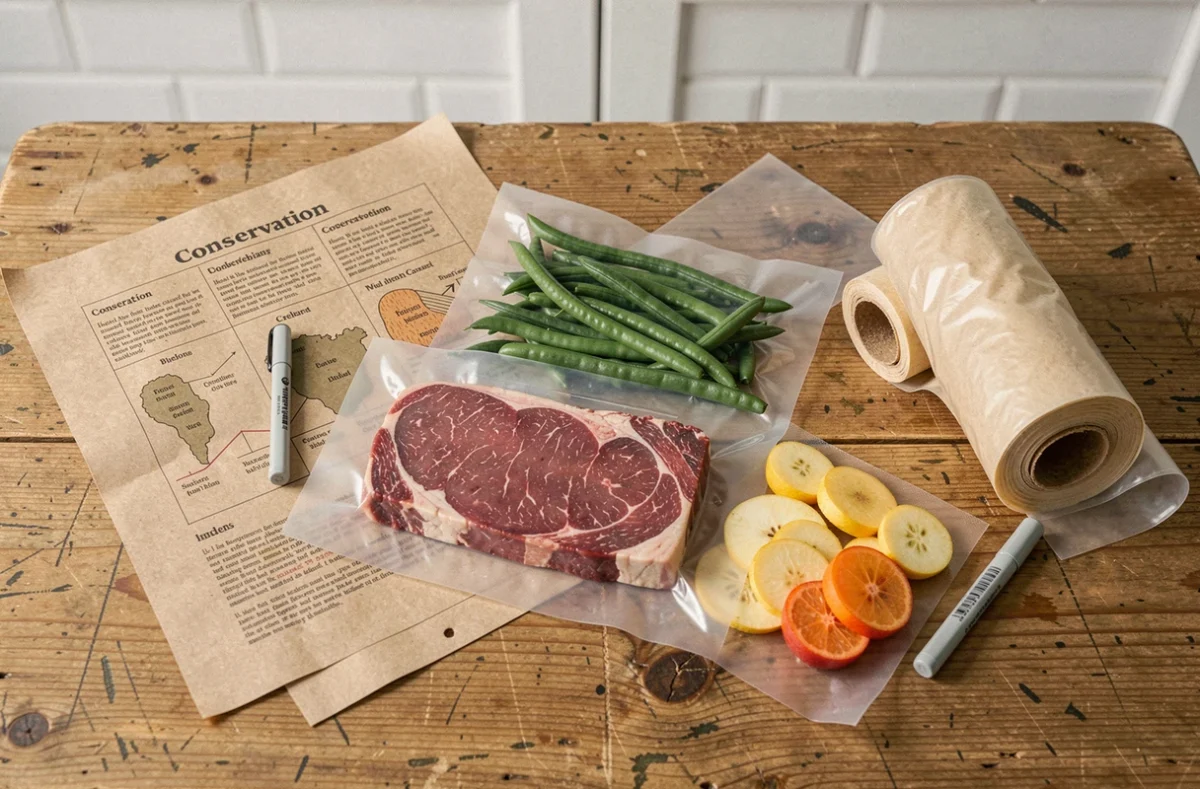
Bags, rolls, and jars: choosing the right vacuum container
The type of container changes the game in terms of daily practicality and preservation quality. We distinguish three main categories.
Textured bags for external suction machines are the most common in domestic use. They work with compact and accessible devices. The texture (small reliefs on the inner surface) allows air to circulate towards the suction nozzle. Without this texture, suction is ineffective.
Smooth bags are reserved for bell machines, which are bulkier and more expensive. They are mainly found in professional catering. They allow for the packaging of liquids (sauces, marinades, soups) without the liquid being sucked into the machine, which is a recurring problem with external suction models.
Jars and rigid containers compatible with vacuum sealing work with an adapter plugged into the machine. They are well-suited for crumbly or fragile foods that bags would crush. However, the level of vacuum achieved in a jar is lower than that of a sealed bag, which reduces shelf life.
Vacuum shelf life: reading a chart without mistakes
Duration charts circulate everywhere, with figures varying from one site to another. This dispersion can be explained: the actual duration depends on the product, its initial freshness, storage temperature, and the method used.
In a professional context, regulations require validating shelf life through specific studies for the product, sometimes including “challenge tests” to assess the behavior of Listeria monocytogenes. In home cooking, no one conducts this type of test. Therefore, we rely on rough estimates, keeping a margin of caution.
A preservation chart is a guideline, not a guarantee. If the food has a suspicious odor, an abnormal texture, or swelling of the bag upon opening, the indicated duration is no longer valid. The swelling of the bag is, in fact, the most reliable warning signal: it indicates gas production by microorganisms, meaning that preservation has failed somewhere in the chain.