France’s second-hand clothing market is no longer limited to peer-to-peer platforms. Brands and retailers are now developing their own in-store resale sections, take-back schemes and resale channels. In 2026, expressing your personal style every day also means exploring these options to find distinctive pieces without relying on new collections.
Meanwhile, the law of July 8, 2026 introduced a penalty on ultra-fast fashion items, which took effect on September 1, 2026, and provides for a ban on advertising them in the media from January 1, 2027. Second-hand items are explicitly exempt from this measure.
Expressing your style through second-hand fashion and repairs
Most fashion guides recommend building a capsule wardrobe by buying new basics. This approach assumes you have a substantial budget and access to current collections. For anyone who refreshes their outfits mainly through second-hand shopping, repairs or swaps, the logic is different: style is built from what already exists, not from what a runway dictates.
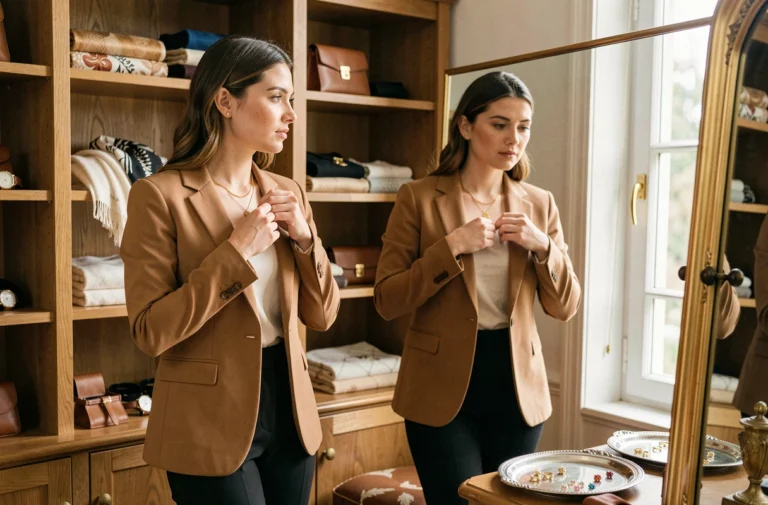
Hunting for a jacket in a thrift store or picking up a garment through an in-store take-back section calls for a more discerning eye. You’re not choosing from a selection curated by a creative director. You assess each piece individually, using your own criteria. It’s an exercise that helps you recognize what suits your shape, favorite colors and lifestyle.
Repairs play a complementary role. Having a thrifted pair of trousers altered to get the right fit, replacing the buttons on a second-hand coat, shortening a dress that’s too long: these small changes turn a generic garment into a tailored piece. Those exploring fashion at Les Conseils de Mélanie will find the same idea: style comes as much from attention to detail as from the initial choice of garment.

Fashion trends and everyday life: what the regulatory framework changes
Textile environmental labeling, which has been optional since October 2025, adds another factor to consider when choosing a garment. Since October 1, 2026, a third party can assess a product if its manufacturer has not done so. For consumers, this means environmental information is gradually becoming available for items that previously had none.
The penalty on ultra-fast fashion changes how low prices are perceived. An item with a very low price tag no longer costs quite as little as it used to if the penalty applies. This measure makes second-hand options even more attractive in terms of price, since resale items are explicitly exempt.
In practice, keeping up with trends doesn’t mean buying new pieces as soon as they appear. A cut or pattern spotted on the runway eventually makes its way into the resale market a few months later. The time lag is often short, and the item costs a fraction of its original price.
How to read a trend without being swept up in it
A fashion trend is a direction, not an obligation. If earthy tones dominate a season, simply look through your existing wardrobe for pieces in similar shades. A brown sweater thrifted last year, a rust-colored scarf forgotten in a drawer: bringing clothes you already own back into rotation is the easiest way to follow a trend.
If nothing you own fits the bill, ask yourself: do I like this trend enough to still wear it two years from now? If the answer is unclear, it’s better to pass. Purchases driven by seasonal urgency fill up wardrobes without strengthening personal style.
Creating a cohesive look from mismatched pieces
The main challenge of a wardrobe built through second-hand shopping, swaps or hand-me-downs is its variety. The clothes come from different brands, eras and price ranges. To make an outfit work day to day, you need a common thread.
- A color palette is the most effective tool. Sticking to five or six shades that work together makes it possible to put together cohesive outfits, even when the pieces have nothing in common to begin with.
- Textures create visual hierarchy. Pairing a structured fabric (heavy denim, felted wool) with a fluid one (viscose, silk) adds depth to an outfit without the need for a statement accessory.
- Proportions matter more than the brand. Wide-leg trousers call for a fitted top, and vice versa. This contrast works regardless of the garment’s price or where it came from.
- Accessories bring everything together. A go-to belt, a pair of shoes worn three days out of five, a watch: these staples anchor your style even when the rest changes.
Everyday women’s outfit: a practical example
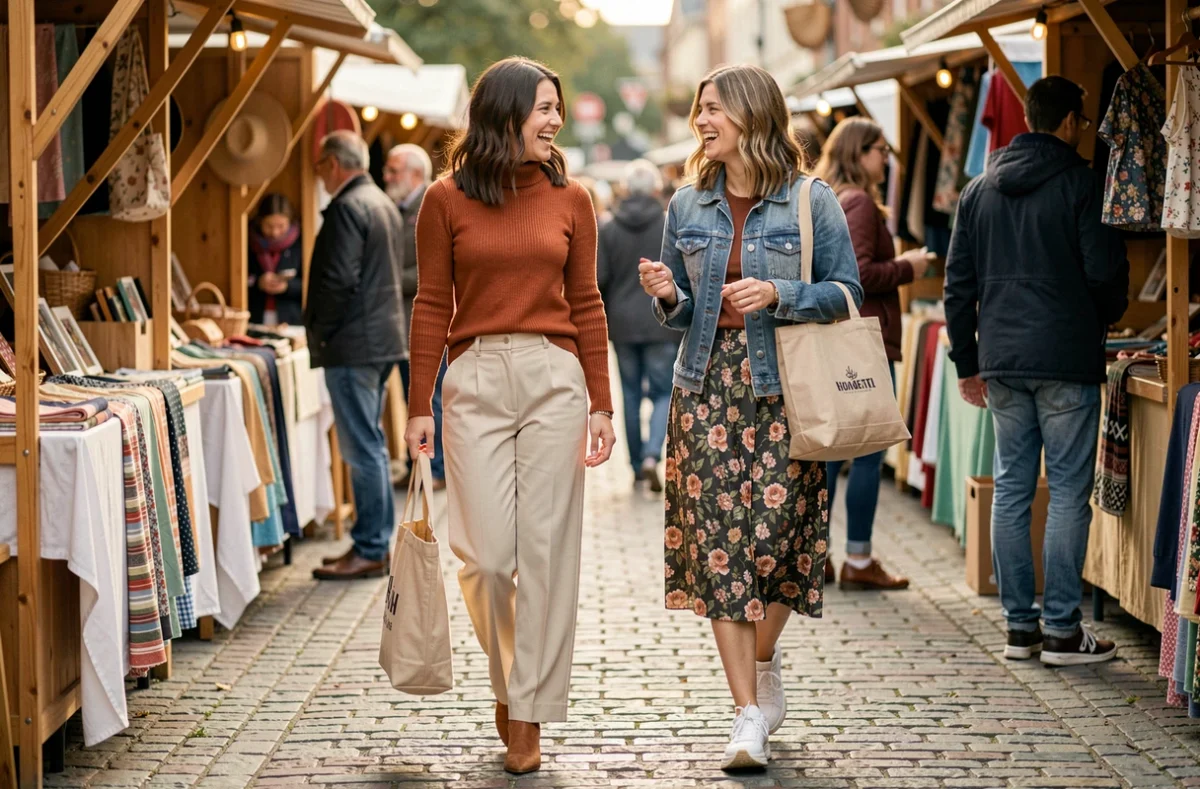
A blazer found in a thrift store, a basic white T-shirt, straight-leg jeans picked up from an in-store resale section, and ankle boots you’ve owned for two seasons. None of these pieces was bought to match the others. Their color palette (blue, white, black), contrasting textures (the blazer’s wool against the T-shirt’s cotton) and silhouette (structured top, straight-leg bottom) create a cohesive look.
Personal style doesn’t depend on where you shop. It depends on recognizing what works for you and putting it together with intention. Whether a piece comes from a second-hand store, a swap with friends or a considered new purchase, the result is the same when your selection criteria are clear.
What to consider before giving up on buying new
Some clothing categories are hard to find second-hand. Underwear, swimwear and technical sports shoes are among the items for which buying new is often the only realistic option.
Second-hand sizes are not equally available. Very small and very large sizes are underrepresented in the resale market. Second-hand shopping tends to favor mid-range sizes, which can limit options for some people.
Environmental labeling, which is still optional for textiles, does not cover peer-to-peer transactions. A garment bought at a clothing swap or sale has no environmental information label. This criterion is therefore only useful for purchases in stores or on brand platforms that participate in the scheme.
Giving up new purchases entirely isn’t a requirement for expressing your style. The balance lies in making deliberate choices: buy new when necessary, look elsewhere when possible, and in both cases choose pieces that fit into an already cohesive wardrobe.