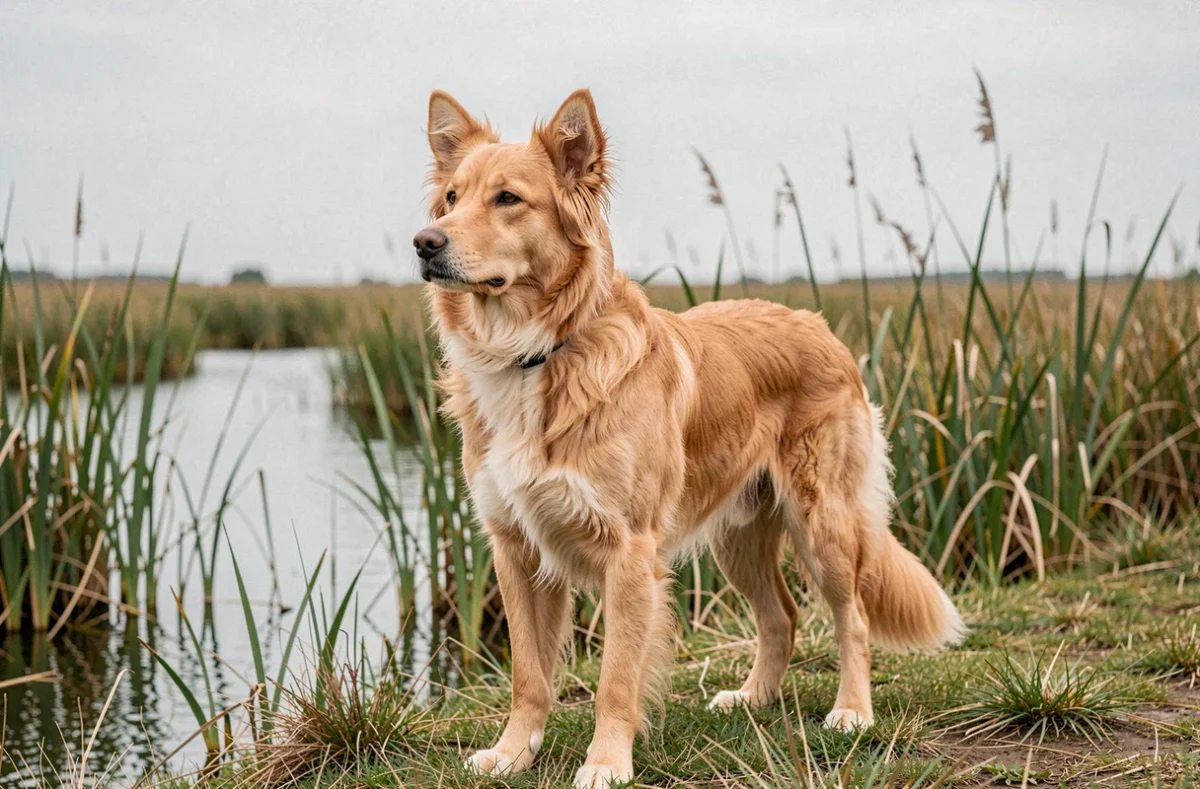
The lagoon shepherd is an indigenous dog from West Africa, found from Senegal to Niger. Also known as Laobé, yellow dog, Dick Dick, or Baoulé shepherd depending on the regions, it is one of those local breeds whose population declines as urbanization progresses. Versatile by nature, a guardian of herds, a hunting assistant, and a protector of the home, this dog has an ancient place in West African rural societies.
Its current situation raises a concrete question: how to preserve a breed that has never benefited from a structured breeding program or international cynological recognition.
Genetic value of the lagoon shepherd compared to imported breeds
Online content often describes the lagoon shepherd as a rustic dog, without going further. Recent research on village dogs in West Africa provides more precise insights. Whole genome sequencing analyses show that these local canine populations maintain a robust genetic reservoir, much more diverse than that of hyper-selected breeds imported from Europe or North America.
This genetic diversity is not a trivial detail. It translates into better adaptation to tropical parasites and endemic diseases of the region. Where an imported German shepherd or Labrador requires costly veterinary care in a tropical climate, the lagoon shepherd has co-evolved with its environment for centuries.
The stakes go beyond simple heritage preservation. Losing this breed means losing a reservoir of genes for adaptation to tropical pathologies, a resource that directly interests animal health research. Programs studying stray and creole dogs in other regions (Cape Verde, Caribbean) already use these animals as epidemiological sentinels to understand the mechanisms of natural resistance to parasites. The lagoon shepherd could play a similar role in West Africa, provided its population does not collapse beforehand.
A detailed profile on the lagoon shepherd on Animal Liberation lists the physical and behavioral characteristics of the breed, a useful starting point for anyone looking to identify these dogs in the field.
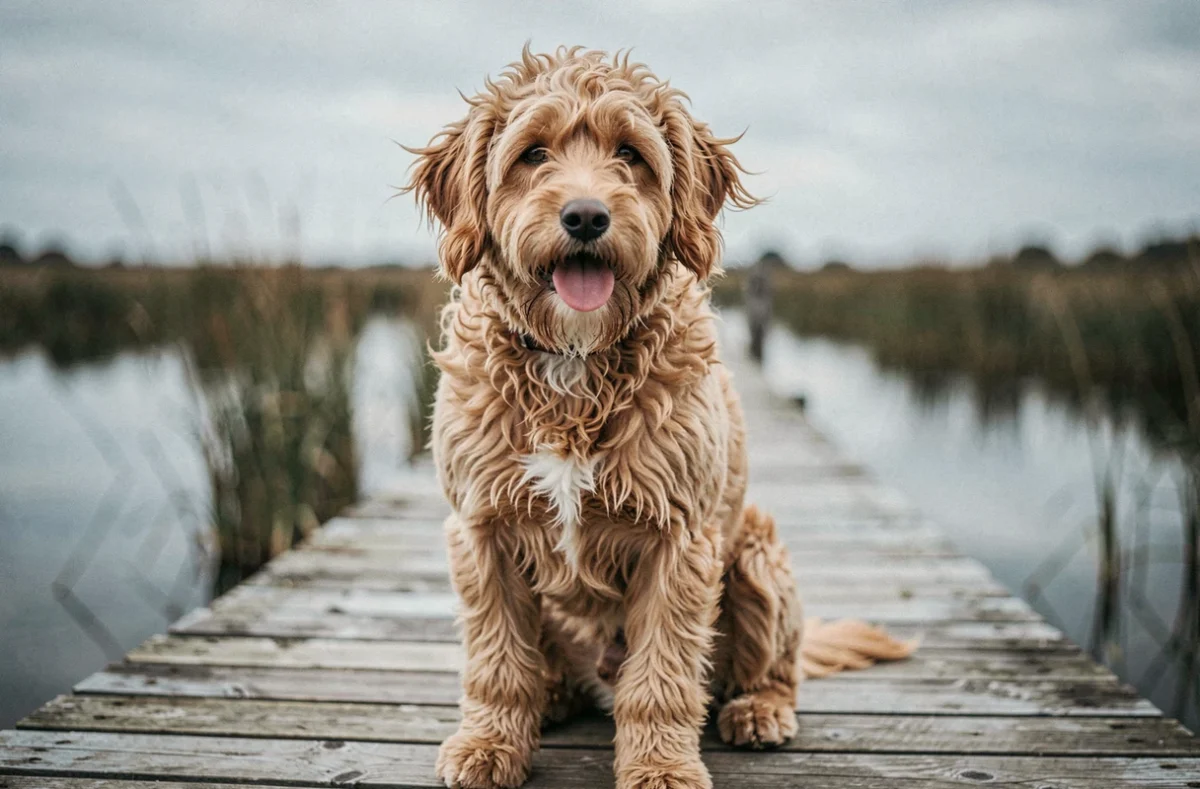
Lagoon shepherd and dogs of ancient Egypt: a debated lineage
Several sources link the lagoon shepherd to the dogs of ancient Egypt, alongside the Basenji from Central Africa or the Africanis from South Africa. This lineage is based on morphological similarities (erect ears, lean silhouette, curled tail) and on the comparable roles these dogs played in ancient societies: hunting, guarding, home protection.
In pharaonic Egypt, the dog was a psychopomp animal, guiding souls to the realm of the dead. It received medical care and sometimes a burial upon its death. This elevated status contrasts sharply with the current situation of the lagoon shepherd, often regarded as a worthless stray dog in West African cities.
The available data do not allow for a definitive conclusion on this ancient lineage. Genomic studies on African dogs are progressing, but no publication confirms a direct and exclusive genetic link between the lagoon shepherd and the mummified dogs of the Nile Valley. Field reports diverge on this point: some researchers see it as a continuous lineage, while others view it as a case of evolutionary convergence in comparable environments.
Concrete threats to the breed: urbanization and uncontrolled crossbreeding
The lagoon shepherd was once present in the majority of rural households in West Africa. Today, an increasing number of these dogs roam the streets of cities, without identified owners and without health monitoring. Two main factors explain this decline.
- Rapid urbanization reduces the spaces where the dog performed its traditional functions (herding, hunting, monitoring homes). In urban areas, it loses its perceived utility and becomes just another stray animal.
- Uncontrolled crossbreeding with imported breeds gradually dilutes the specific genetic heritage of the lagoon shepherd. Without a breeding registry or recognized standard, nothing officially distinguishes a pure lagoon shepherd from a mixed breed.
- The lack of recognition by international cynological federations deprives the breed of any formal protection framework. No standard, no pedigree book, no reasoned breeding program.
The Animal Protection Committee of Côte d’Ivoire (CPA-CI) is one of the few organizations documenting and defending this breed. However, no national conservation program currently exists in the countries where the lagoon shepherd is still present.
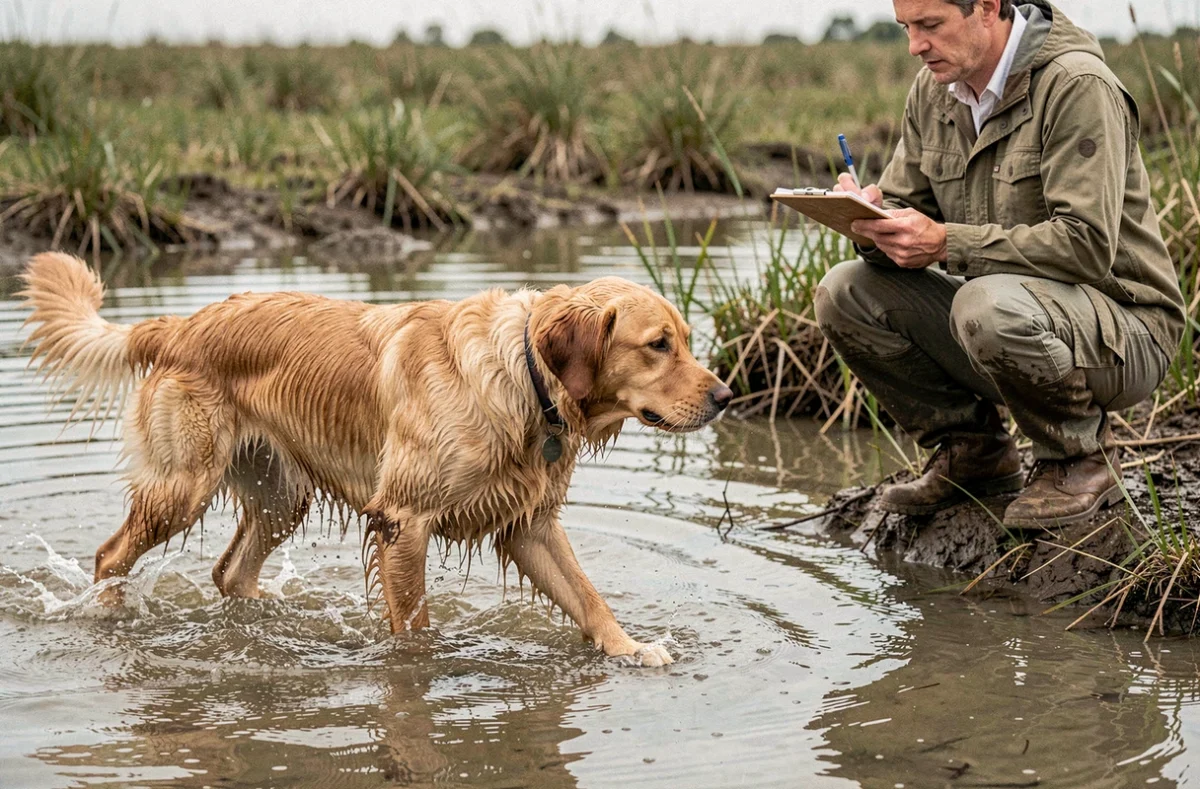
Lagoon shepherd: a working dog suited to rural lifestyles
The lagoon shepherd is not a companion dog in the European sense of the term. Its temperament reflects centuries of natural selection oriented towards work. An instinctive guardian, it monitors homes without any specific training. In rural areas, it accompanies foot travel, follows herds, and alerts to the presence of intruders or predators.
Its medium size, lean musculature, and heat resistance make it particularly suited to savanna and lagoon environments. It requires little care compared to imported breeds and feeds on a frugal diet without developing common joint or respiratory pathologies seen in brachycephalic or large breeds.
Behavior and trust towards humans
Lagoon shepherds raised in regular contact with humans develop a strong trust relationship. Stray individuals, on the other hand, exhibit wary behavior that complicates their adoption or care by organizations.
This difference in socialization poses a challenge for rescue programs. An adult street dog that has never been handled requires several weeks, sometimes months, of acclimatization before it can integrate into a home. Organizations working with these dogs know this: the rehabilitation of the lagoon shepherd requires patient trust-building work, incompatible with impulsive adoptions.
The lagoon shepherd remains an emblematic case of a local breed threatened by the absence of an institutional framework. Its preservation is not solely an animal welfare issue: it touches on canine biodiversity, veterinary research, and a cultural heritage that dates back several centuries. Associative initiatives exist, but they lack the means and scientific support to transform field observations into a viable conservation program.