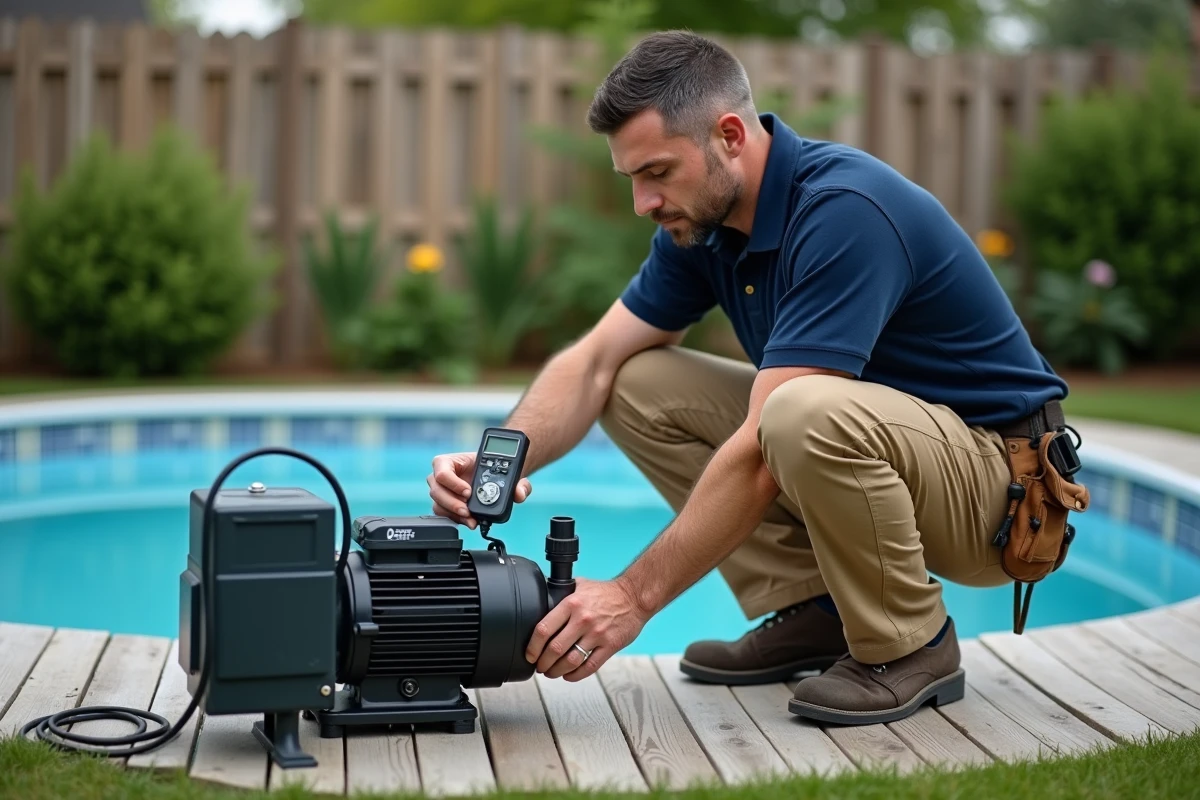
A pool sand pump consumes electricity every day throughout the swimming season. Its consumption depends on the motor power, daily operating time, and the type of technology used. Understanding these parameters allows for proper sizing of the equipment and reducing the energy bill related to pool filtration.
Motor Power and Flow Rate: The Two Variables That Determine a Sand Pump’s Consumption
The electrical consumption of a filtration pump is calculated by multiplying the motor power (expressed in watts) by the number of operating hours. A high-power pump that runs for a long time will mechanically consume more than a model suited to the actual volume of the pool.
The most common pitfall is oversizing. Many owners choose a pump that is too powerful for the volume of water to be filtered. The flow rate then exceeds what the sand filter can effectively handle, wasting energy without improving water quality.
For an average-sized pool, as detailed in Habiz’s analysis, the pump’s flow rate should correspond to the pool volume divided by the desired filtration time. A properly sized motor filters all the water in four to six hours depending on the temperature, without straining consumption.
Single-Speed or Variable-Speed Pump: Real Impact on the Electricity Bill
Single-speed pumps operate at full power as soon as they are turned on. The motor runs at maximum, whether the filtration need is high or low. At the beginning or end of the season, when the water is cold and the necessary filtration is reduced, this constant power represents a direct waste.
Variable-speed pumps adjust their flow rate to the actual load of the filter. Instead of running at full speed for a few hours, they operate at low speed over a longer time frame. Consumption decreases significantly because the power consumed decreases non-linearly with speed reduction: a motor running at half speed consumes much less than half of its nominal power.
This shift towards variable-speed pumps and high-efficiency motors is the defining trend in the market in 2025, confirmed by several manufacturers and specialized distributors. The goal is not only to save electricity but also to avoid continuous full-power operation, which prematurely wears out the sand and filtration system.
European Regulation on Pump Motors
Regulation (EU) 2024/1834, published on June 21, 2024, strengthens eco-design requirements for electric motors and variable speed drives. Pool filtration pumps equipped with standard or drive-controlled motors are directly affected.
This means that future models of sand pumps will need to meet stricter energy efficiency thresholds. For new purchases, prioritizing a motor that complies with these requirements protects against regulatory obsolescence.
Daily Filtration Time: The Most Underestimated Lever
The necessary filtration time mainly depends on the water temperature. The warmer the water, the faster microorganisms develop, and the longer the filtration needs to be. The commonly applied rule is to divide the water temperature by two to obtain an indicative number of filtration hours.
Many owners let their pump run on a fixed schedule throughout the season. This approach ignores temperature variations and generates overconsumption at the beginning and end of the season when the water is colder.
- Below 15 °C, filtration can be reduced to a few hours a day or even turned off during active winterization.
- Between 20 and 25 °C, the filtration period generally covers half the day.
- Above 28 °C, filtration needs to run longer, sometimes continuously on heatwave days.
Adjusting the filtration time each week according to the actual temperature remains the most effective gesture to reduce consumption without degrading water quality.

Sand Filter Maintenance: A Often Ignored Factor of Overconsumption
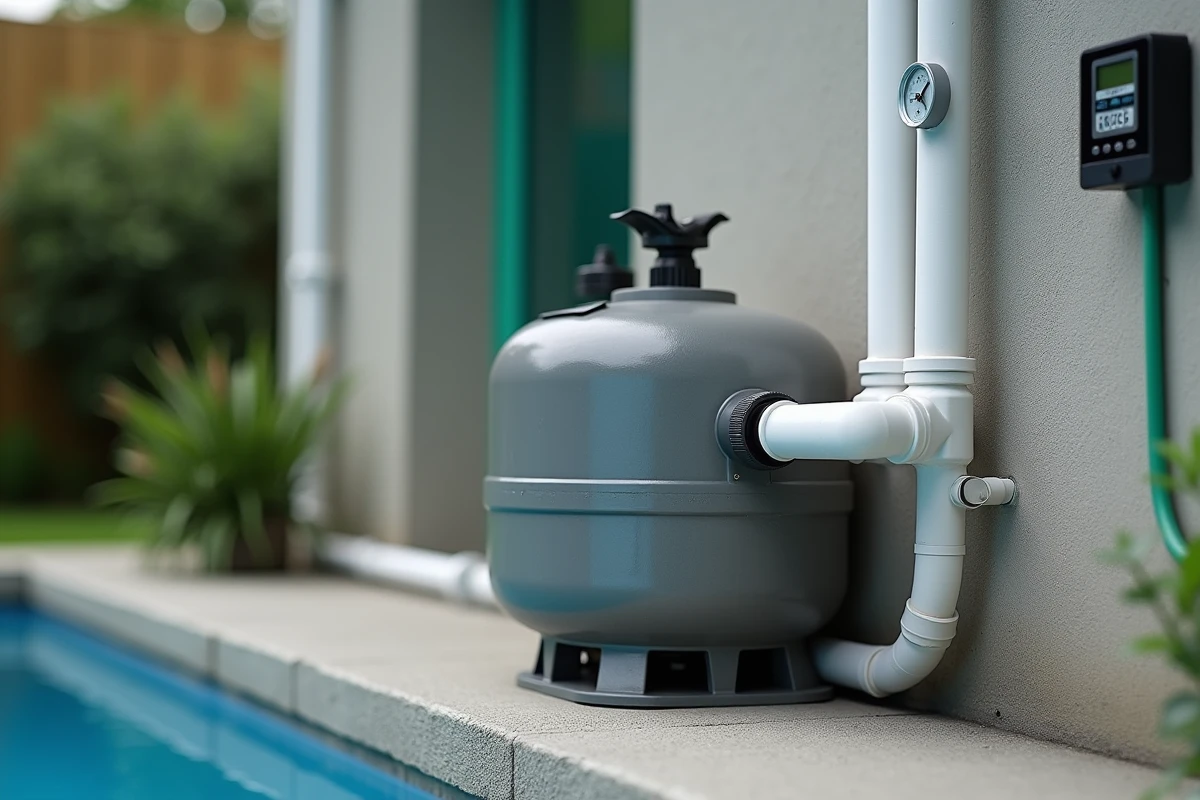
A clogged sand filter increases pressure in the hydraulic circuit. The pump then has to work harder to maintain the same flow rate, which raises its electrical consumption. The filter’s pressure gauge is the indicator to monitor: when the pressure exceeds the normal operating threshold, backwashing is necessary.
Backwashing and Water Consumption
Backwashing reverses the flow of water in the filter to expel impurities accumulated in the sand. This operation consumes water, which is discharged into the sewer. Performing backwashing only when indicated by the pressure gauge, rather than at fixed intervals, helps avoid wasting both water and electricity.
- Monitor the pressure on the gauge after each week of intensive use.
- Replace the sand in the filter every few years depending on usage, as worn sand filters less effectively and increases hydraulic resistance.
- Install a filter bag in the skimmer to reduce the workload on the sand filter and space out backwashings.
A clean filter reduces the pump’s consumption because the motor operates without excessive resistance. The maintenance of the sand filter and that of the pump are inseparable from an energy perspective.
Sand Pump and Solar Power: A Still Marginal Option
Some owners are considering powering their filtration pump with solar panels. This solution remains technically viable, especially for low-power pumps or installations with battery storage. Solar production partially coincides with the hours when filtration is most needed (sunshine and heat are correlated), which represents a natural advantage.
The main constraint is the sizing of the photovoltaic system. The number of panels needed depends on the pump’s power, local sunlight, and whether or not there is a suitable inverter. For a modest-sized pool with a low-power variable-speed pump, solar coupling can cover a significant portion of the electrical needs.
The consumption of a sand pump is managed by three decisions: choosing a properly sized motor, adopting variable speed, and adjusting the filtration time to the actual water temperature. The rest involves regular maintenance of the filter, which maintains hydraulic efficiency and prevents the filtration system from becoming a silent energy sink.