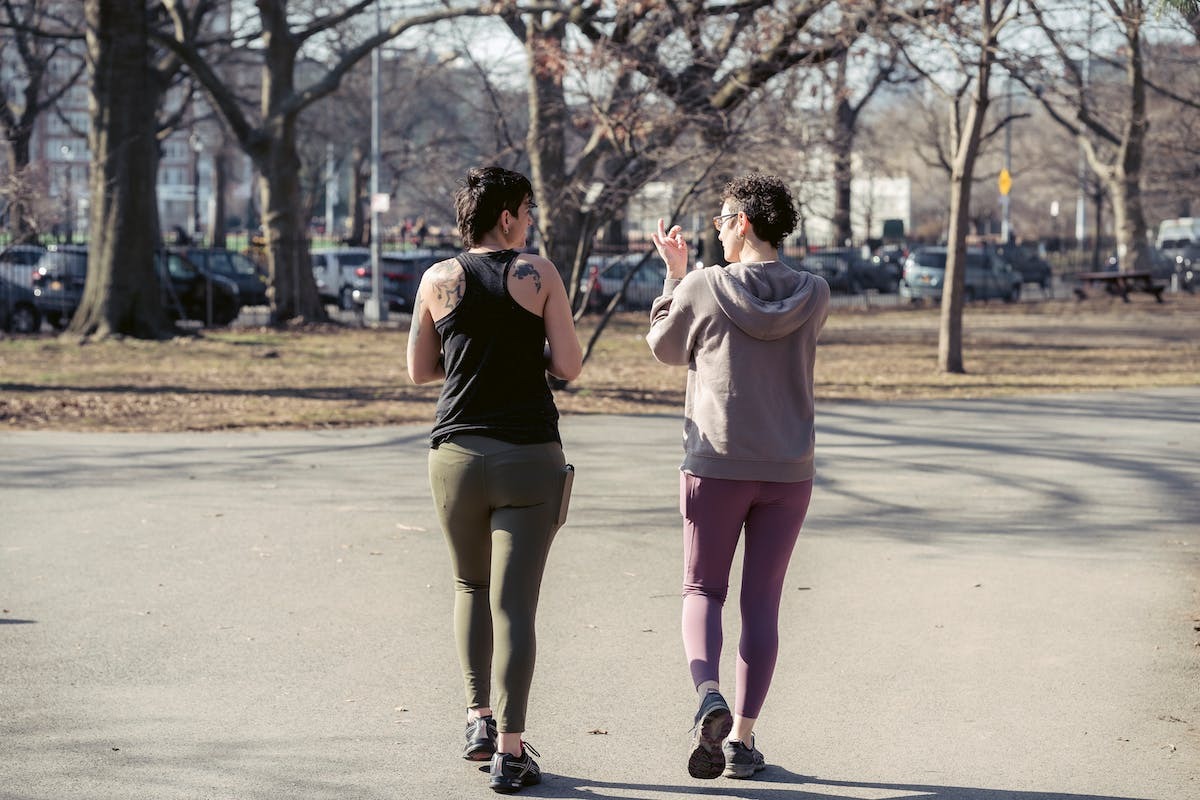
In an era where obesity and overweight have become global plagues, the need to burn calories is more pressing than ever. Among the various ways to achieve this, walking stands out for its simplicity and practicality. Accessible to everyone, it can be practiced anytime and anywhere. Whether during your daily commutes or dedicated walks, every step you take brings you closer to your weight loss goal. Here is a guide to help you maximize calorie loss while walking.
Walking: an ally for effectively burning calories
In the context of power walking, intensity is a key factor in amplifying energy expenditure. Each person can modulate this intensity by adjusting various parameters such as pace, terrain, and associated walking movements.
If you are new to this physical activity or if your endurance level is still low, an hour of walking at a slow to moderate pace generally allows you to burn between 180 and 300 calories. This estimate varies depending on body weight: the more you weigh, the more calories you burn when moving.
To increase this number • sometimes referred to as ‘calorie 1 hour of walking’ -, several techniques can be implemented: First, increasing the pace can be done gradually over several sessions to avoid any injury related to sudden intense effort.
Also opt for varied terrains with occasional slopes to engage your glute and thigh muscles more, while also challenging your cardiovascular system; thus adding some valuable units to the ‘calorie 1 hour of walking’ counter.
Additional movements like swinging your arms or slightly lifting your knees are also beneficial for intensifying your efforts while improving your posture during walking.
Similarly, consider interval training exercises that involve alternating fast and slow phases during your sessions. Not only do they spice up your walks, but they also significantly contribute to boosting your metabolism even after you finish your workout; and recent studies point to a considerable increase in the total number recorded under ‘calorie 1 hour of walking’.
However, remember that it’s not just about ramping up your effort from the start, but rather gradually implementing these changes into your habits so that they become an integral part of your daily routine without causing any unnecessary stress or discomfort.
To maximize your ‘calorie 1 hour of walking’ count, nothing beats combining terrain variation, gradual pace increase, and strategic incorporation of complementary exercises.

5 tips to intensify your walk and burn more calories
In the world of power walking, it is essential to understand the importance of good posture and adequate breathing. Indeed, these two aspects play a crucial role in the effectiveness of your training and in caloric expenditure.
Let’s focus on posture. Good posture while walking allows for better weight distribution and promotes optimal muscle activation. To maintain a correct posture, keep your head up with your eyes looking forward. Your shoulders should be relaxed and slightly back, while your arms swing naturally along your body.
As for your torso and abdomen, gently contract your abdominal muscles to support your back while remaining relaxed in that area. Imagine that you have an invisible string gently pulling the top of your head towards the sky to help you maintain a straight spine.
Once you have adopted a good posture, also think about controlling your breathing while walking. Deep breathing not only effectively oxygenates your muscles but also releases accumulated tension.
Ideally, inhale through your nose while gently expanding your belly for a few seconds, then exhale slowly through your mouth, completely releasing all the air in your lungs; this process provides a pleasant feeling of relaxation both physically and mentally.
The synchronization between breathing movements and steps while walking is also important for optimizing your effort. Try to adjust your breathing according to your steps, for example, inhale for two steps and then exhale for the next two.
By mastering the art of good posture and conscious breathing, you maximize the benefits of every step you take. Not only does this improve your energy efficiency, but it also strengthens your postural muscles and promotes better joint mobility.
Keep in mind that it takes some time to integrate these concepts into your daily routine. Start gradually by paying particular attention to your posture and breathing for a few minutes before extending this practice throughout your sessions.
When you walk with intention and awareness, correct posture and adequate breathing are essential for burning more calories while sustainably maintaining good overall physical condition; this is the ultimate secret to the perfect ‘calorie 1 hour of walking’.
Posture and breathing: the keys to effective walking for calorie loss
To maximize caloric expenditure during your walking sessions, you need to think of walking as a gentle activity that does not require special preparation, but in reality, this can lead to muscle injuries if you do not adequately prepare your body.
Avoid focusing too much on the calories burned during your walk. While it is important to have a general idea of how many calories you can lose with this activity, fixating solely on this aspect can detract from your enjoyment and motivation. Instead, focus on the physical and mental well-being that walking brings you.
Another common mistake is maintaining a constant intensity throughout the session. If you really want to maximize your caloric expenditure, alternate between different intensities during your walk. You can add fast intervals where you speed up the pace to temporarily increase cardiovascular effort and thus further stimulate fat burning.
Don’t forget to properly hydrate your body before and during the walk to avoid any dehydration that could reduce your physical performance.
While we are discussing mistakes to avoid to optimize your efforts in caloric expenditure when practicing your personal walkathon, also know that consistency in your practice is key. Try to walk regularly, at least three to four times a week, to maintain a steady progression and achieve lasting results.
Avoid monotony by varying your routes and incorporating stimulating elements during your walks. You can choose different trails with varied landscapes or listen to motivating music that encourages you to move more.
To maximize your caloric expenditure during your walking sessions, be sure to avoid common mistakes such as neglecting warm-up and stretching, focusing solely on calories burned, maintaining a constant intensity throughout the session, not hydrating properly, lacking consistency in your practice, and falling into monotony. By avoiding these mistakes and adopting a balanced approach with good posture and conscious breathing, you can fully enjoy the physical and mental benefits that this activity offers while effectively burning unwanted calories.
The pitfalls to avoid to optimize your caloric expenditure while walking
A key element in the quest for calorie loss through walking is undoubtedly consistency. Although this may seem obvious, it is crucial to emphasize the importance of regular practice to achieve significant results.
Consistency in your walking routine will not only improve your performance and fitness level but also accelerate the process of calorie burning. By practicing regularly, you stimulate your metabolism and promote better utilization of stored fats in your body.
It is recommended to plan at least three to four walking sessions per week to maintain an adequate rhythm. The ideal duration varies depending on individual fitness levels, but generally, a session of about 30 minutes to an hour can be considered effective.
Consistency in this routine is essential to maximize health benefits and achieve your caloric loss goals. Be careful not to get discouraged when results are not immediate; remember that every step counts and contributes to your overall progress.
To avoid monotony or boredom during your regular walks, feel free to diversify your routes. Explore different neighborhoods or natural spaces near you to fully enjoy each outing while discovering new landscapes that will revive your motivation.
Incorporate stimulating elements during your walks, such as listening to energizing music or even using a pedometer to track your progress. These small adjustments can make all the difference and keep your interest in this beneficial activity.
You should pay close attention to any signs of excessive fatigue or pain during your sessions. If necessary, take rest days to allow your body to recover.
Integrate consistency into your daily practice and stay motivated. Walking offers a simple yet powerful way to burn calories and improve overall fitness. By maintaining a regular routine, diversifying your routes, and using stimulating elements, you will maximize the benefits for caloric loss while increasing enjoyment with every step taken towards better health.
Staying motivated: our tips for remaining motivated during your calorie-burning walk
In this article, we are discussing the section titled ‘Setting goals to burn calories while walking‘. To successfully achieve your goals, it is crucial to set clear and achievable targets.
The first step is to assess your current activity level and determine how many calories you want to burn during your walking sessions. Think about ensuring a sustainable and effective process.
Once you have identified your caloric goal, it is time to plan your training program. Determine how many days a week you will dedicate time to walking and calculate the duration needed to reach your specific goals.
Don’t forget to vary your routes to continuously stimulate your metabolism. Alternate inclines by adding climbs or exploring different terrains such as natural trails or urban paths.
To maximize the caloric efficiency of each outing, consider adopting a more dynamic gait by actively engaging all the muscles in your body. By paying particular attention to your posture and naturally swinging your arms throughout the movement, you will engage your abdominal, gluteal, and hamstring muscles more.
In order to further intensify your sessions, consider using additional equipment such as light ankle weights or hand weights. It is important to mention that the use of accessories should be practiced with caution and after consulting a professional in the field.
To maintain your motivation throughout your journey to burn calories while walking, try to regularly set new goals as you progress. Whether it’s a gradual increase in the number of steps per day or conquering a new hilly path, these small challenges will help you stay focused on your efforts and continue to burn calories effectively.
In the next article, we will discuss common mistakes to avoid when trying to burn calories while walking.