No national regulation provides a specific status for Marguerite houses, despite their growth in several regions. Some project leaders find themselves facing unexpected legal hurdles: intergenerational cohabitation, local taxation… Nothing is simple legally, especially since public subsidies remain the exception. Meanwhile, demand is skyrocketing, particularly in areas poorly equipped with solutions for seniors.
The strength of this model? It lies in unexpected alliances: a dynamic town hall, a few open social landlords, engaged associations. However, there is no one-size-fits-all recipe. The technical support varies greatly from one department to the next. It quickly becomes clear that duplicating the formula often proves to be a puzzle, given the differing contexts.
Why the Marguerite house is increasingly appealing: a human-scale accommodation model
When Jacqueline Decultis founded the Maison Marguerite in Tence in 2016, she paved the way for a new perspective on aging. The Marguerite Houses cater to autonomous seniors and offer them a place where friendliness is as important as safety. Forget the anonymity of institutions: here, people live in groups of nine or ten, in a family atmosphere, free from constant medicalization, but woven with volunteers, local friendships, and intergenerational camaraderie.
At the heart of the project is the shared trust among residents, house managers, and families. Daily life is not improvised: it revolves around meals, maintenance, shared activities, while ensuring everyone’s privacy. Values are lived here: experienced solidarity, genuine kindness, and respect for the individual above all. Each house adapts to its city or village, opening up to the neighborhood, rejecting isolation.
The Marguerite Houses Network operates through a system of autonomous concessions, marked by ESS recognition and the ESUS label. Technology sometimes makes an appearance, but it remains discreet, there to facilitate daily life, never to impose itself. To discover how to open a Marguerite house step by step, many draw inspiration from the balance found: human warmth, flexible organization, a need for security without rigidity. Local partners, associations, merchants, or health services make each house truly vibrant and connected to its territory.
What are the essential steps to open a Marguerite house?
Every adventure begins with a project leader, sometimes a collective, rooted locally. In Saint-Yan, Claire took the plunge; in Ambierle, Florence Teyssier has taken over: different profiles, but the same strong idea: to offer a setting where one wants to age, far from constraints.
First, it is necessary to find the right location: a generous, bright space, close to amenities and transport. A garden or shared space enriches the project by creating links with the community. Next comes the study of local needs, anticipating adjustments and renovations, followed by compliance with regulations imposed by authorities.
On the financial side, entering the dance is not trivial. La Nef, a committed partner, supports the network with a funding of 3.4 million euros planned from 2023 to 2025. It is essential to present a solid file, rally local authorities, and engage the local associative fabric. The ESS recognition and ESUS labeling are real assets, opening doors and strengthening the project’s legitimacy.
It is also necessary to build a team: a house manager, supported by volunteers and partners rooted in local life. Exchanges with health and safety structures are essential. At every step, it is about adjusting, listening to families, adapting to residents’ expectations, without losing the spirit of the project.
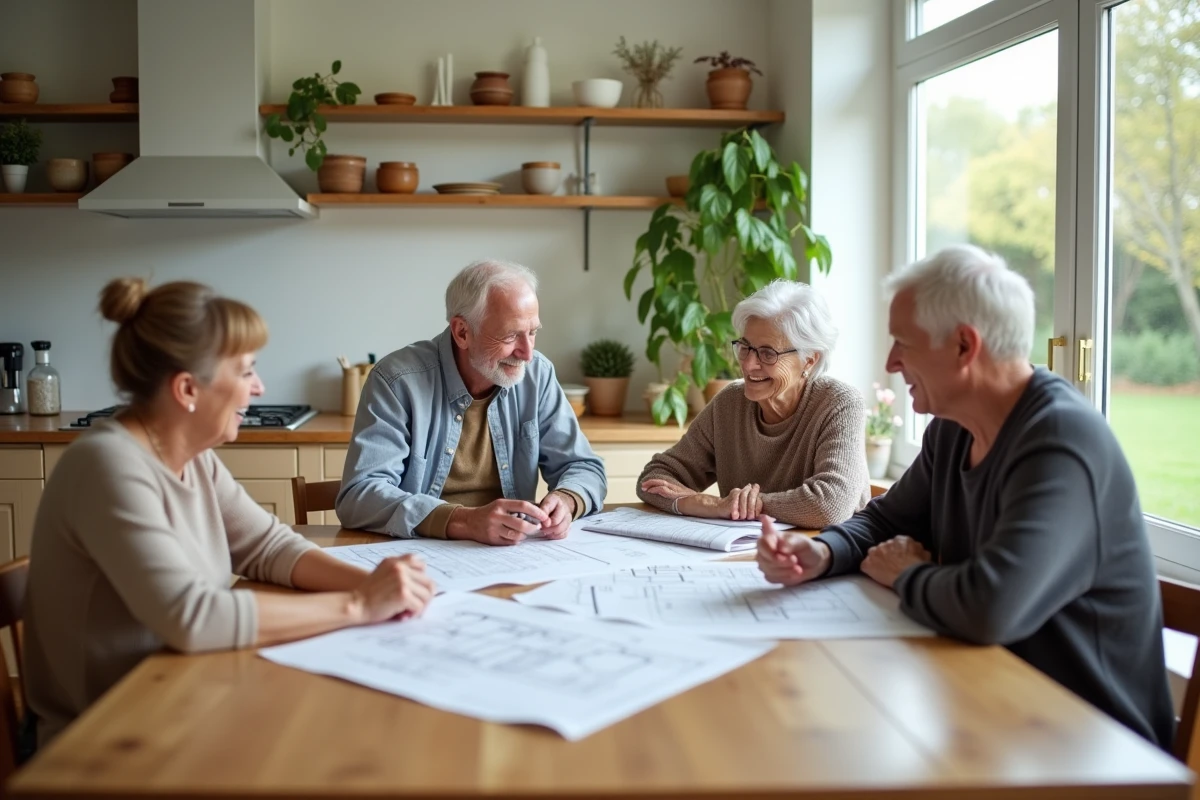
Practical advice and resources to succeed in your project, from the initial idea to welcoming residents
From the very start, surrounding yourself with a motivated collective of volunteers and seeking support from local partners makes all the difference. Links with merchants, associations, and healthcare professionals amplify the house’s integration into the neighborhood or village. The Marguerite Houses Network willingly shares the experience accumulated by Jacqueline Decultis: her dual background as a nurse and a SSIAD manager is reflected in the method and reliability of the model.
Between family friendliness and administrative reality, a balance must be struck. Authorities require that the building and services meet a strict list of criteria. This necessitates active collaboration with the town hall, safety officials, and health actors. Even without constant medicalization, anticipating dependency situations remains wise to secure the collective.
Funding represents a constant challenge. La Nef, by injecting 3.4 million euros, has allowed the network to expand its reach. The file must be rigorous and convincing. Highlight the ESUS labeling and commitment to Social and Solidarity Economy to gather the interest of funders and institutional partners.
From the outset, involving relatives proves beneficial. Families, engaged in the layout, invited to visits, consulted for every project evolution, help strengthen trust and the uniqueness of the house.
Here are several concrete levers to solidify your project:
- Personalized support: organize daily life around the real needs of each resident, whether for activities or meals.
- Openness to local life: strengthen ties with schools, shops, and associations.
- Progress while respecting founding values: dignity, solidarity, freedom for all.
Ultimately, each Marguerite house shapes a true home. It blends influences, personalities, rituals, creating a place where aging is not a concession but a conscious choice. And what if, tomorrow, aging was imagined around a well-filled table, among knowing smiles and familiar voices?