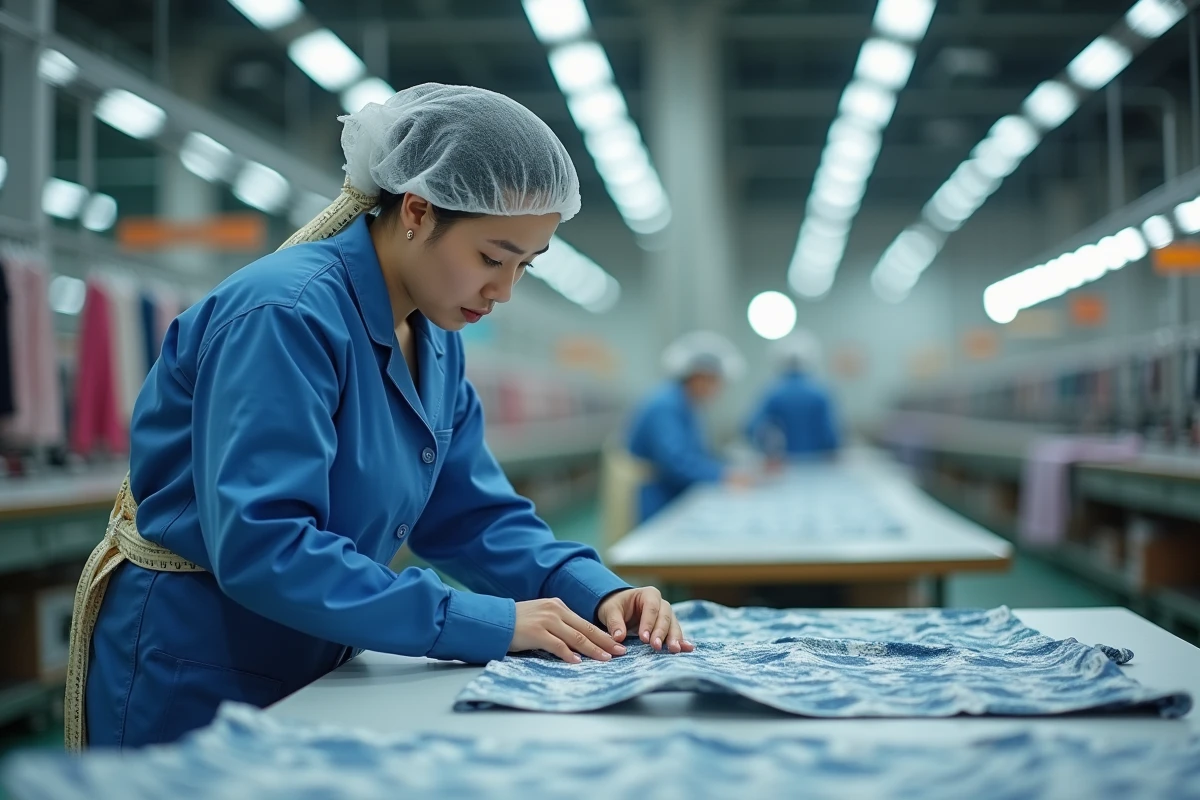
Temu sells thousands of textile references every day at prices that defy any European competition. Behind this commercial mechanism, a production chain concentrated in China feeds the platform without interruption. Understanding where and how these clothes are made requires tracing a deliberately opaque circuit, which new European regulations are just beginning to clarify.
Temu’s Industrial Model: Stockless Production Managed from China
Temu operates on a marketplace model, not as a manufacturer. The platform, owned by PDD Holdings (also the parent company of Pinduoduo), connects third-party sellers, primarily Chinese, with buyers around the world. It does not own any factories or sewing workshops.
The mechanism relies on a so-called “light made-to-order” logic: suppliers launch small series, test demand through browsing and sales data, and then increase production of the references that perform well. This operation minimizes unsold items, but it requires workshops capable of modifying their production lines in just a few days.
The provinces of Guangdong and Fujian concentrate a majority share of the textile suppliers listed on the platform. These regions have a dense industrial fabric, where large factories coexist with small sewing workshops. The same garment may have its fabric spun in one province, dyed in another, and assembled in a third. In terms of the manufacturing of Temu garments, this geographical dispersion makes traceability particularly difficult for an end buyer to establish.
Social Audits and Working Conditions in Textile Workshops
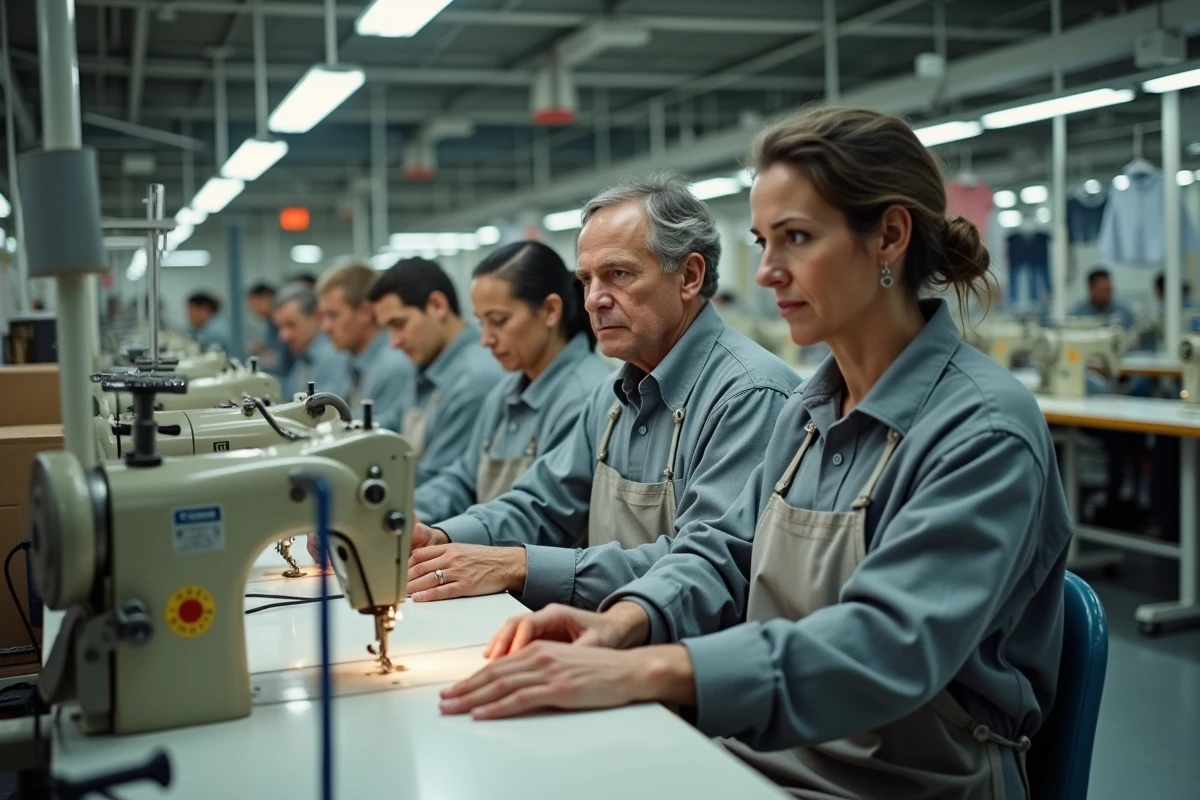
Since PDD Holdings was placed under scrutiny by the U.S. House Select Committee on the CCP at the end of 2023, pressure on working conditions has intensified. According to sector reports from China Labor Watch published in 2024, several Chinese fast-fashion suppliers have indicated that they are receiving requests for more frequent and better-documented social audits than before, focusing on overtime and the age of workers.
However, these audits are still commissioned and funded by the platforms themselves or by the suppliers, which raises a structural independence issue. Field reports vary on this point: some workshops describe inspections that have become regular, while others report never having been checked.
The issue of overtime illustrates this tension well. In the Guangdong garment sector, the pace imposed by the fast restocking model pushes workers to regularly exceed legal working hour limits. The gap between the certifications displayed and the reality of the workshops constitutes a blind spot that current audits do not fully address.
European Regulation and Textile Traceability: What the DSA and CSDDD Change
The European regulatory framework has significantly evolved since 2024. Two texts directly modify the obligations of platforms like Temu:
- The Digital Services Act (DSA), fully applicable since February 2024 for very large online platforms, imposes transparency obligations on sellers and listed products. The DGCCRF in France and the Bundesnetzagentur in Germany have launched investigations into the traceability of textiles sold through these marketplaces.
- The Corporate Sustainability Due Diligence Directive (CSDDD), adopted by the Council in March 2024, targets supply chains in high-risk sectors, including textiles. It will require affected companies to identify and prevent human rights and environmental violations throughout their value chain.
- The proposed European regulation on the eco-design of sustainable products envisions, in the long term, a digital passport for textiles, which would allow tracing the origin of materials, manufacturing locations, and chemical treatments applied.
For Temu, these texts represent a new constraint. The platform will either have to require verifiable traceability data from its suppliers or risk sanctions in the European market. The available data do not yet allow for measuring the actual level of compliance achieved.
Concrete Limits of Current Traceability
Identifying the exact factory that sewed a t-shirt purchased on Temu remains, in most cases, impossible for the consumer. Product sheets rarely mention the manufacturer. When a country of origin is indicated, it often refers to the shipping location (a consolidation warehouse), not the manufacturing site.
The textile digital passport could change the game, but its effective implementation is not expected for several years. Until then, the European buyer must deal with fragmented information.

Quality of Temu Clothing: What Returns and Tests Reveal
The low price of Temu logically raises questions about the quality of the delivered products. On forums and in consumer feedback, two observations frequently arise.
The fabrics used are often lightweight synthetic blends (polyester, elastane). The durability after washing and the strength of the seams vary significantly from one seller to another, even for visually identical items. The same model may come from two different workshops depending on the order date, which explains the quality discrepancies reported by buyers.
Some categories of basic products (plain t-shirts, simple accessories) offer a fair balance between the price paid and the use obtained. The problem is more pronounced with structured pieces (jackets, fitted pants) where the cut and finishes reveal the savings made on manufacturing.
The global textile industry produces colossal volumes of low-cost clothing every year. Temu did not invent this model, but the platform has made it accessible on an unprecedented scale through direct sales from the factory.
The European regulatory pressure is currently the most concrete lever to force greater transparency on the locations and conditions of manufacturing. The textile digital passport, if it comes to fruition within the expected timelines, will be the first tool allowing consumers to verify for themselves what the platforms claim.